Generative AI in education: Personalized learning at scale forces Sonoma schools to rethink assessment
Generative AI is reshaping Sonoma classrooms and administrations, enabling personalized learning at scale while forcing schools to redesign assessments, train staff, protect equity, and update policies to ensure students gain future-ready skills without widening existing gaps.
- Personalized learning at scale: AI-driven tutors and adaptive content can deliver individualized instruction and boost engagement.
- Assessment overhaul: Traditional tests are being redesigned toward projects, portfolios, and oral defenses that demonstrate critical thinking.
- Teacher leadership: Faculty training and governance are essential to manage ethics, bias, and practical classroom use.
- Local stakes: Sonoma must balance innovation with equity, device access, and policies that protect student data and community values.
Key information
Generative AI in education is reshaping how students learn, how teachers teach, and how schools measure learning. New tools can act as digital tutors, create customized lessons, and help with administrative tasks. At the same time, these tools are challenging old ways of testing and grading. Educators and leaders must act now to set rules, train staff, and protect fairness and access, protect fairness and access, protect fairness and access.
Personalized learning at scale: what it looks like
Adaptive tutors and AI-driven platforms can assess a student’s knowledge, identify gaps, and present differentiated lessons. These systems can automatically generate practice problems, adjust difficulty, and provide immediate feedback. Schools that deploy these tools report higher engagement and improved outcomes — meaning students who once fell behind may receive targeted, affordable support.
Systems can also craft lesson pathways tailored to that learner, tailored to that learner, tailored to that learner, enabling scalable personalization without the cost of one-on-one human tutoring.
AI redefining assessment and classroom work
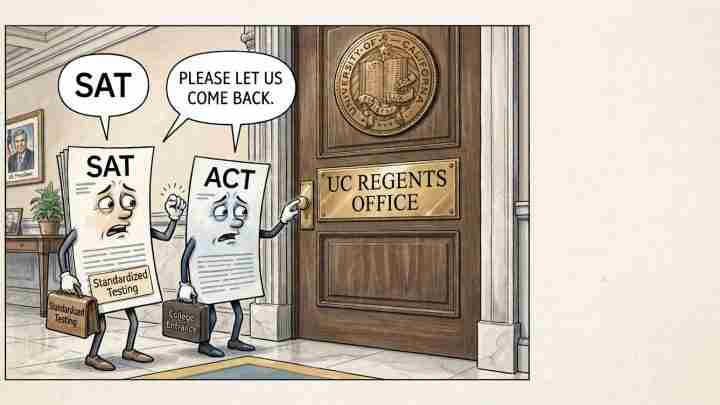
Generative AI tools produce polished answers quickly, which undermines assignments that reward simple recall. Educators report an “unraveling” of conventional homework and grading systems and are experimenting with alternatives that emphasize analysis and creation.
“Assessment must shift from recall to reasoning — projects, portfolios, and defenses can better show true learning.”
Many districts are moving toward open-ended projects, oral defenses, or portfolio-based assessment to evaluate problem solving, synthesis, and application rather than rote memory.
Supporting teachers and faculty leadership
Institutional leadership is calling on faculty to lead adoption. Professional development, interdisciplinary AI labs, and hands-on training help teachers learn to use AI responsibly and to design assignments that harness tools rather than be undermined by them. Programs are teaching educators how to manage issues like bias and hallucination and how to integrate AI to save planning time and focus on higher-value instruction.
Faculty who lead adoption and set classroom norms can guide ethical use and practical classroom strategies: help teachers learn how to use AI safely and effectively.
Expanding inclusivity and accessibility
Generative AI offers tools such as speech-to-text, text-to-speech, and adaptive content that can assist students with visual, hearing, or learning challenges. AI can also adapt lessons to different reading levels, provide translations, and make content more accessible across languages — for example, AI can translate materials.
Equity depends on access to devices and broadband. Without reliable connectivity or hardware, AI tools risk widening existing gaps rather than closing them.
Institutional urgency and workforce development
Generative AI skills are increasingly required across jobs and sectors. Institutions that incorporate AI tools into curricula can help students build future-ready skills and speed up lifelong learning and upskilling. Schools and employers that lag risk losing competitiveness as workers with AI literacy are in demand: Generative AI skills are becoming important across jobs.
Administrative and student life support
Beyond instruction, AI chatbots and virtual assistants can streamline registration, scheduling, basic advising, and FAQs — improving responsiveness and freeing staff for complex work. These systems operate 24/7 and can reduce load on human staff, but they require robust privacy and data policies. Several analyses note potential cost savings and service improvements: lower costs, lower costs.
Challenges for leaders, policy, and ethics
Students often adopt AI tools faster than institutions can respond. Many responses have been reactive or piecemeal: piecemeal responses documented. Leaders must coordinate policy, set ethical guidelines, and encourage careful experimentation, careful experimentation.
Key risks include biased outputs, misinformation, and hallucinations. Schools need clear rules on acceptable AI use and systems to check accuracy and fairness.
Questions for local oversight
Districts and colleges face hard decisions: How will teachers be trained? Who owns student data used by AI platforms? How will assessment be redesigned to reflect authentic learning? How will rural and low-income students gain device and broadband access? Experts urge leaders to act: must act now to shape policy rather than react later, must act now to shape policy rather than react later.
Implications for Sonoma, California
Economic impact
Sonoma’s local economy — built on agriculture, wine, tourism, and small business — could benefit if education programs teach AI-aware skills that blend tech with hospitality and ag knowledge. Programs that add AI training may help vineyard managers, winery staff, and hospitality workers gain data and marketing skills to protect jobs: protect jobs, protect jobs.
Political consequences
Local boards and city leaders will make choices about procurement, privacy, and policy. The Sonoma County Office of Education and districts such as Sonoma Valley and Santa Rosa will likely need to develop clear AI policies that balance innovation with equity and community priorities: policy considerations, policy considerations.
Social effects
If implemented thoughtfully, AI can enhance supports for students with disabilities and English learners. But without device and broadband access, rural and low-income families risk falling further behind; leaders must prioritize device distribution and broadband expansion.
Cultural relevance
Sonoma values local connection and small-class engagement. Community members are likely to ask that AI strengthen human relationships and support locally relevant curricula — regional history, viticulture skills, and local language — rather than replace them: AI should augment, not supplant, community-driven instruction. Faculty should lead the AI revolution.
Practical applications for residents
Local options include piloting AI tutors for college and job prep, expanding AI-focused certificates at SRJC and Sonoma State for hospitality and ag tech, and deploying bilingual chatbots for enrollment. Every pilot should include teacher training, privacy rules, and monitoring: clear rules on privacy and use, clear rules on privacy and use.
Sources and further reading
- AWS Executive Insights: Top generative AI skills and education trends for 2025
- Entrepreneur: How generative AI is completely reshaping education
- Cengage Group: AI’s impact on education in 2025
- Springs Apps: Main AI trends in education 2024
- AACSB Insights: Why faculty should lead the AI revolution
Local leaders, educators, and parents in Sonoma now face practical choices about tools, training, and policy. How those decisions are made will determine whether generative AI becomes an equalizing force for personalized learning — or one more change that widens existing gaps.