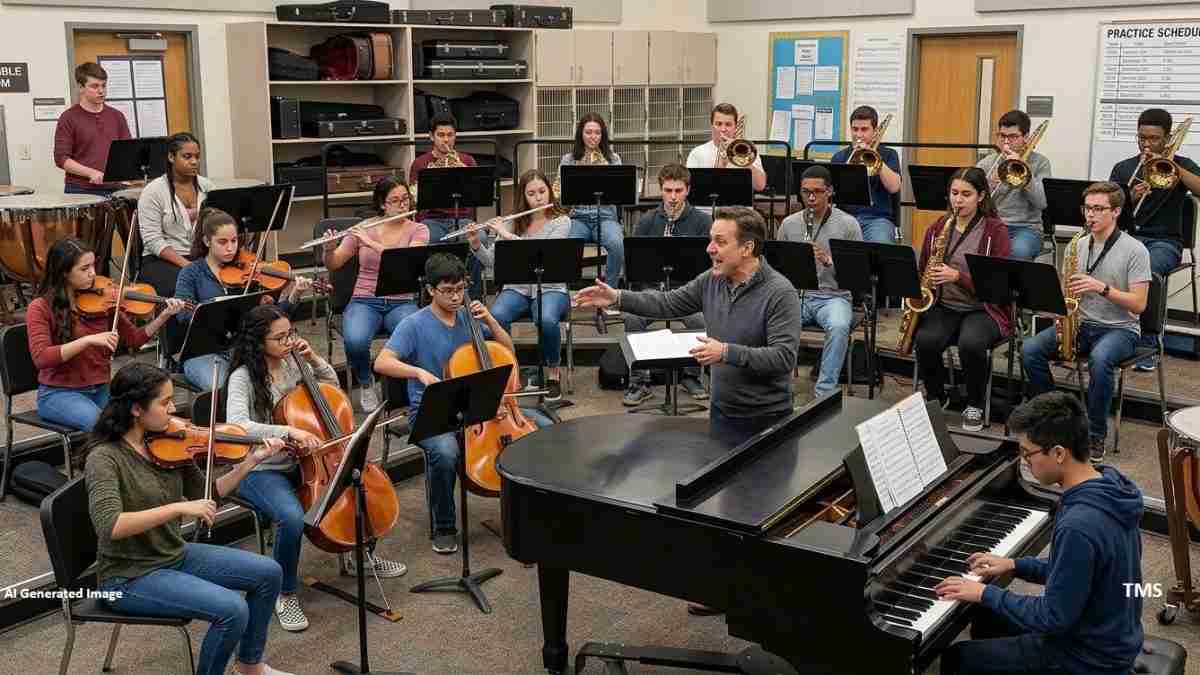
SACRAMENTO, Calif., Aug. 16 (Our California Times) — California schools are beginning to return unspent money from Proposition 28, the 2022 ballot measure that set aside about $1 billion each year for arts education in public K-12 schools.
The returns do not mean the funding program has ended. They reflect a three-year deadline in the law and the difficulty some schools have had hiring arts teachers and interpreting the rules for spending the money.
The California Department of Education has not announced how much money was returned after the first three-year spending period. State officials plan to redistribute unspent funds to schools that are using their allocations in compliance with the law, based on annual spending reports.
What Proposition 28 requires
Proposition 28 distributes money mainly according to student enrollment. Schools with larger populations of low-income students receive additional funding.
At least 80% of each school’s allocation must be spent on additional arts staff or educators. The remaining money can be used for supplies and other arts-related expenses.
The law also says the money must supplement existing arts programs, rather than replace funding that schools were already providing. That requirement is known as “supplement, not supplant.”
Any funds that remain unspent after three years must be returned to the state. The law does not allow schools to hold the money indefinitely.
Why has spending been difficult?
School officials have cited two main obstacles: finding qualified arts teachers and understanding which expenses are allowed.
Hiring requirements can be especially difficult for schools that want to add music, dance, theater or visual arts classes but do not have enough qualified applicants. Schools also have questioned whether they can share teachers across campuses or pool money allocated to individual schools.
El Dorado County Superintendent of Schools Ed Manansala said local education officials want to use the funds properly but need clearer direction. “We need clarity and confidence that we’re doing this the right way,” Manansala said. He also said the county has a long history of supporting the arts and wants to make sure the new funding is handled correctly.
The state’s supplement-not-supplant rule has created another concern. Arts advocates and labor leaders have alleged that some districts used Proposition 28 money for positions, programs or supplies that were already supported by existing funds. Such spending would not meet the law’s requirement if it did not expand arts education.
The available reporting does not establish how many districts violated the rule or how much money was involved. The California Department of Education has not released a statewide total of returned funds in the information available for this report.
Create CA, a nonprofit that supported Proposition 28, compiled data indicating that dozens — and possibly hundreds — of schools spent none of their allocations. The organization’s estimate does not identify a confirmed statewide total in the available information.
What happens to returned money?
The California Department of Education is responsible for receiving spending reports and overseeing the program. State officials plan to redirect unspent money to schools that are following Proposition 28’s spending requirements.
That process could benefit schools that have already hired arts teachers or expanded classes but need additional resources. It could also increase pressure on districts to document how the money adds to existing programs.
The supplied information does not identify the schools that returned money, the amounts returned by each school or whether every return resulted from the three-year deadline. It also does not show how quickly redistributed funds will reach schools or students.
Could the rules change?
Assemblymember Al Muratsuchi authored Assembly Bill 2440, which was reported as having passed the Assembly unanimously in May 2026. The bill would allow districts to pool money assigned to individual schools and would permit districts that cannot meet the 80% educator-spending requirement to seek a waiver from the California Department of Education.
The bill’s final status, text and effective date are not established in the available information. Austin Beutner, a former superintendent of the Los Angeles Unified School District, criticized the proposal and said it would weaken Proposition 28’s protections.
For schools, the central issue remains practical: how to turn a statewide promise of expanded arts education into classes with teachers, schedules and supplies. Until districts have enough qualified staff and clear guidance, some of the money voters approved may continue to sit unused or be returned for redistribution.