Study suggests sperm whales communicate like humans with vowel-like calls
A UC Berkeley and Project CETI study finds sperm whale “codas” contain slow, vowel-like acoustic patterns similar to human speech, using machine learning and large drone/underwater datasets—opening new possibilities for decoding whale communication and aiding conservation.
- Vowel-like structure: Researchers found acoustic features in sperm whale codas that resemble slow human vowels, a key element in human spoken language.
- Machine learning at scale: Project CETI’s drone and sensor dataset plus deep learning enabled accurate click detection, pattern classification, and dialect recognition.
- High accuracy tools: Funders report tools with 99.5% click detection, 97.5% pattern classification, and 95.3% dialect recognition from Audacious Project documentation.
- Conservation and local impact: Findings could inform marine protections, improve acoustic monitoring, and benefit coastal communities like Sonoma through research partnerships and eco-tourism.
How the team studied whale language
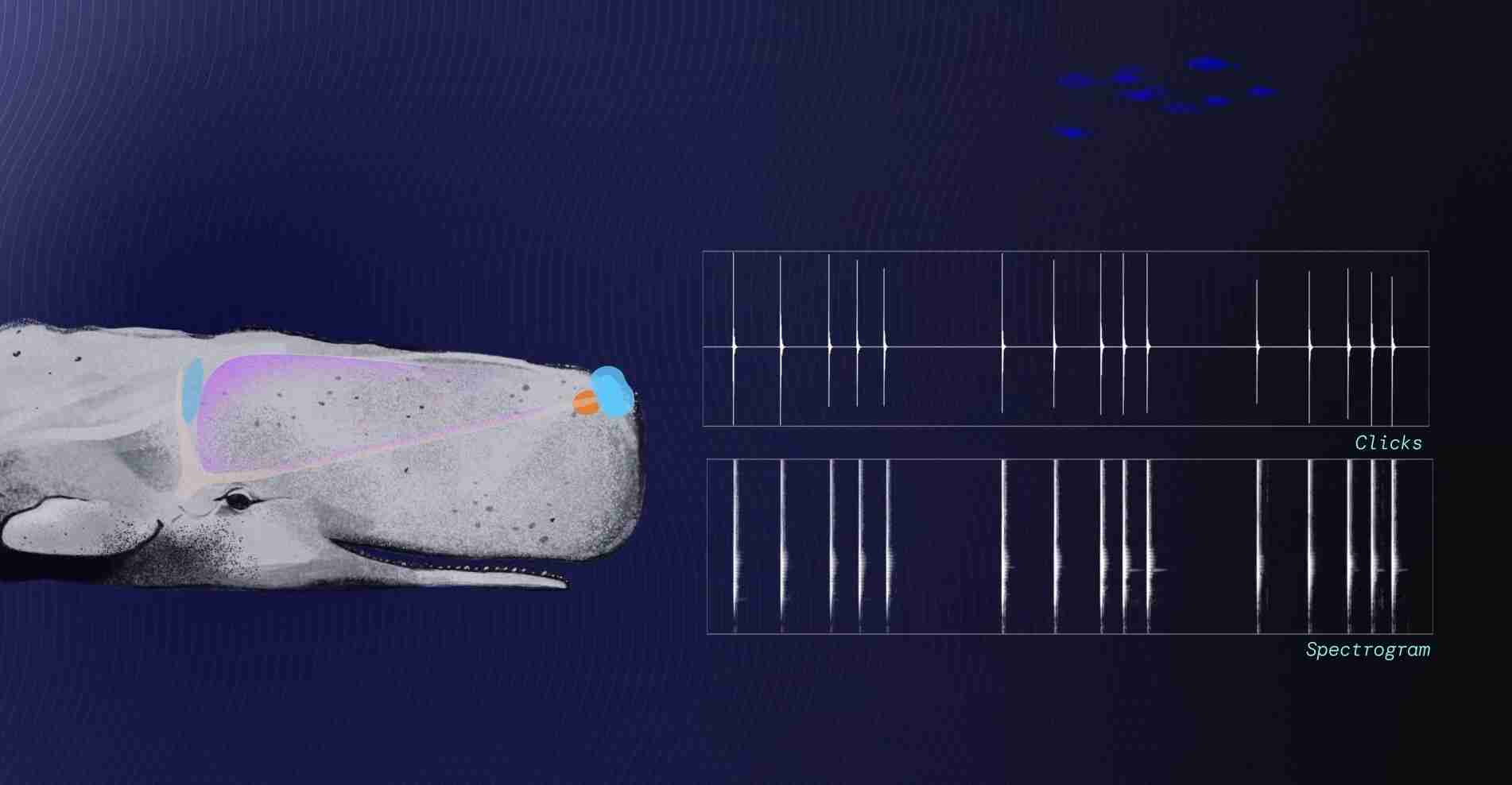
Scientists historically described sperm whale codas as short click patterns—akin to Morse code. This study, led by UC Berkeley linguists and collaborators, reframes many codas as exhibiting slow, steady acoustic changes that function like vowels in human speech. These features may help whales distinguish signals the way vowels help humans distinguish words.
“Very slow vowels,” said Berkeley linguistics professor Gašper Beguš, highlighting that some codas change over time in structured, meaningful ways rather than appearing random.
Project CETI’s technology and machine learning
Project CETI built a large, multi-modal dataset by pairing acoustic recordings with behavioral observations collected using gentle aerial drones and underwater sensors. These paired data provide context that helps researchers infer potential meanings for specific codas. See Project CETI for project details.
The team trained deep learning models to extract whale clicks from noisy ocean recordings and to classify distinct call patterns. Funding and public reporting via the Audacious Project list accuracy figures: 99.5% for click detection, 97.5% for pattern classification, and 95.3% for dialect recognition—numbers that enable large-scale, long-term study.
Field work in Dominica and wider sampling
Much fieldwork occurs off Dominica in the eastern Caribbean, where researchers record calls while observing group movements, feeding, and care behaviors. Pairing sound with behavior gives researchers clues about function and context. Project CETI aims to expand sampling to other regions to test whether similar acoustic structures appear globally.
Social structure and cultural variation
Sperm whales live in tight family groups and possess very large brains. The study highlights that codas are used in social contexts and that groups share specific click patterns—analogous to human dialects or regional accents. If codas identify family groups, emotional states, or locations, they serve more complex social roles than simple signals.
Why vowel-like calls matter for language research
Vowels are central to human speech because they form syllables and help encode distinctions between words. Discovering vowel-like acoustic structure in sperm whale codas suggests a layered acoustic system that could combine elements to carry richer meaning. This finding does not prove human-like language, but it raises the possibility of structured syntax or combinatorial systems worth deeper study.
Project aims: decode structure and “talk back”
A long-term goal of Project CETI is to map sounds to behaviors and contexts and ultimately build systems capable of responding in meaningful ways. Achieving a reliable “talk back” system will require sustained work across linguistics, machine learning, field biology, and robotics.
Conservation link: why understanding whales matters
Beyond scientific curiosity, this research bolsters whale conservation efforts. Sperm whales influence marine nutrient cycles and global carbon processes; understanding their social systems strengthens arguments for habitat protection, reduced ship strikes, and limits on ocean noise. See Audacious Project and Project CETI for program context and conservation aims.
Implications for Sonoma, California
Economic impact: Sonoma County’s coastal tourism—whale-watching out of Bodega Bay and nearby harbors—could benefit from science-backed experiences if researchers better identify whale groups and migration patterns. Partnerships with local operators might support citizen science and help small businesses recover.
Political and policy consequences: Findings about complex whale societies and links to carbon cycling could strengthen local support for marine protections, influence shipping lane planning, nighttime lighting rules, and noise ordinances—affecting zoning and environmental reviews.
Social and cultural effects: The study may increase public interest in marine life across Sonoma. Schools, Sonoma State University, and community groups could use the findings for education, public programs, and cultural events that connect residents to ocean stewardship.
Practical applications: Local agencies and nonprofits can apply Project CETI’s machine-learning tools to improve acoustic monitoring off the Sonoma coast—helping issue cautions to boats, adjust fishing practices, and reduce noise impacts.
Research and education ties: UC Berkeley’s proximity creates opportunities for student internships, collaborative fieldwork, and pilot studies involving Project CETI’s methods, expanding local STEM training and conservation technology careers.
Sources and further reading
- UC Berkeley news release on the study
- Project CETI
- Audacious Project profile of Project CETI (machine learning and accuracy stats)
Summary: The discovery that sperm whale codas include vowel-like acoustic features—revealed through Project CETI’s machine learning and UC Berkeley’s linguistic analysis—connects fundamental science to real-world conservation and local benefits for coastal communities such as Sonoma.