Deadly high-speed derailment near Adamuz kills dozens; investigators probe ‘strange’ crash on newly renovated track
At least 39 people died and over 200 were injured when two high-speed trains derailed and collided near Adamuz in Córdoba province, southern Spain, on January 18, 2026. The crash involved an Iryo service and a Renfe train.
- Iryo 6189 derailed shortly after leaving Córdoba-Julio Anguita station and crossed onto an adjacent track, striking a Renfe Madrid–Huelva service.
- Casualties: Officials reported at least 39 dead and more than 200 injured as rescue teams worked at the site.
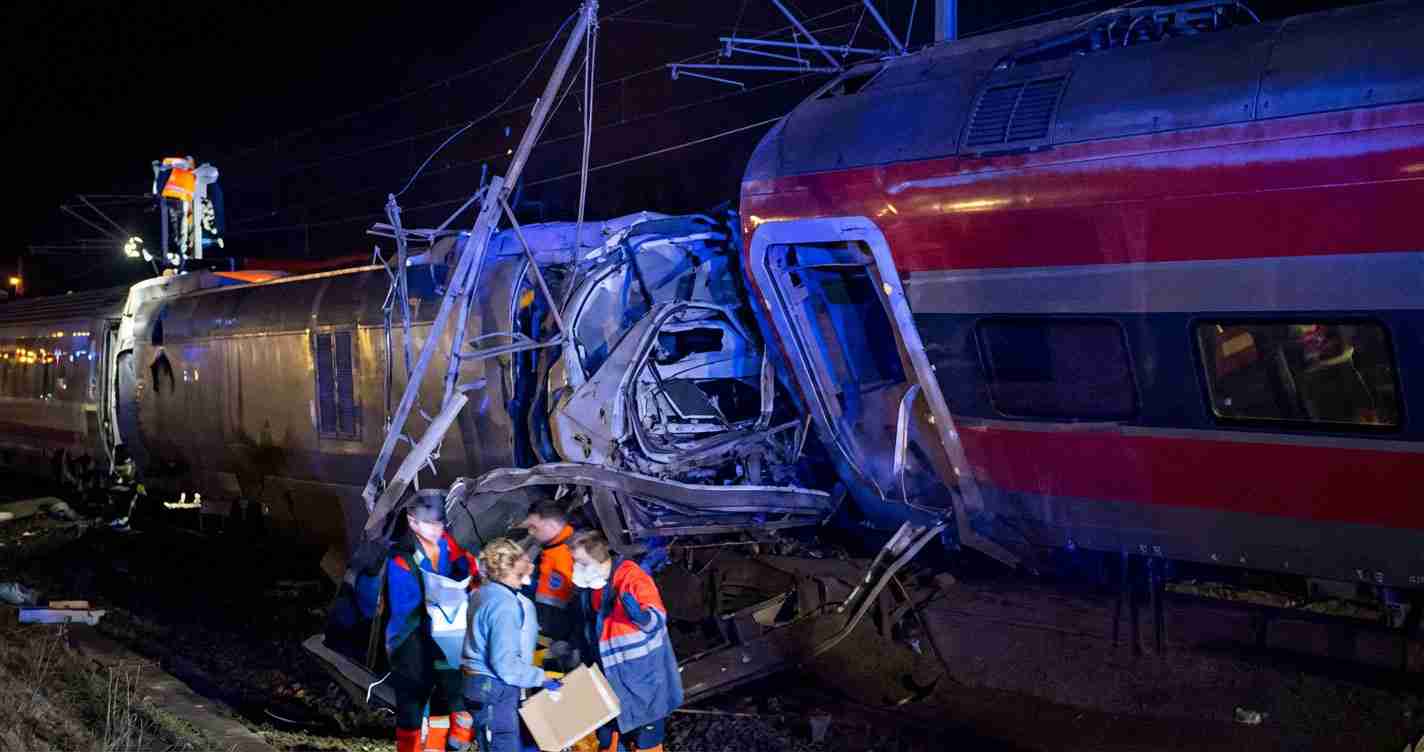
- Scene and damage: The Renfe train’s lead carriages suffered the worst damage, plunging down an embankment and producing most fatalities.
- Investigation focus: The derailment occurred on a straight, recently renovated section of track—described by the Transport Minister as in “perfect condition.”
Main report
What happened
According to early reconstructions, Iryo 6189 departed Córdoba-Julio Anguita carrying roughly 300–317 passengers. Moments after departure the train derailed and crossed a switch onto an adjacent track, colliding with a Renfe Madrid–Huelva service. Eyewitnesses reported chaotic scenes as local residents and first responders rushed to help trapped passengers.
When and where
The collision occurred the evening of January 18, 2026, at about 6:40–7:45 p.m. local time near Adamuz in Córdoba province, on the Málaga–Madrid high-speed line.
Casualties and rescue efforts
Initial counts varied as crews searched wreckage. By Monday morning officials and news outlets reported at least 39 confirmed dead and more than 200 injured, with some reports citing roughly 245 injured and dozens in serious or critical condition. Around 400 people were believed to have been aboard both trains combined. Heavy machinery was required to reach wreckage in the embankment and rescue teams continued recovery and identification work.
Spain deployed emergency services, the Civil Guard, civil defense teams, the Spanish Red Cross and the Military Emergencies Unit. Adif and national authorities set up assistance points for victims’ families at major stations and urged relatives to use official centers for reliable information. The U.S. Embassy also issued an alert.
Apparent damage and technical details
The Renfe train suffered the most severe destruction: lead carriages derailed and fell roughly 4 meters down an embankment, accounting for the majority of fatalities and severe injuries. Some reports indicated the Renfe train was traveling at high speed—reported by some sources at about 200 km/h—at the time of impact. Officials noted the derailment seemed to involve either the tail or leading units of the Iryo train slamming into the Renfe train, but precise mechanics remain under investigation.
Track condition and investigation
Investigators emphasized the highly concerning location of the derailment: a straight section of the Málaga–Madrid high-speed line that was renovated in May 2025 as part of a larger upgrade program. Transport Minister Óscar Puente called the event “really strange” given the track’s recent work and prior descriptions of it being in “perfect condition.” Experts said the inquiry will include forensic analysis of rails, switches, signaling systems and onboard data recorders, and could take weeks or longer.
Aftermath and official reactions
Spanish Prime Minister Pedro Sánchez cleared his schedule to coordinate the national response and pledged support for victims. Andalusian President Juanma Moreno called the impact “very strong.” Adif confirmed the Iryo train derailed onto an adjacent track and organized victim assistance at stations. High-speed services between Madrid and Andalusia were suspended while investigators and crews worked.
Family groups, unions and passenger organizations demanded immediate transparency and access to train data recorders and maintenance logs. Authorities cautioned that casualty numbers could change and urged families to rely on official assistance centers.
Implications for Sonoma, California
Though the crash occurred in Spain, it carries relevance for communities like Sonoma. Possible local effects include:
- Economic: temporary dampening of tourism interest in Spain and modest impacts on Sonoma businesses that serve international visitors.
- Political: renewed scrutiny of U.S. high-speed rail projects and calls for stronger safety oversight and independent inspections.
- Social and emergency preparedness: an occasion for Sonoma emergency managers and nonprofits to review mass-casualty protocols, mutual-aid agreements, and family communication plans.
- Practical advice: travelers should check advisories, register with consular services and keep clear emergency contact plans; the U.S. Embassy alert is a helpful resource.
Reporting notes and sources
This report compiles on-the-ground coverage and official statements as the story developed. Key sources include The Independent, NPR/STLPR, and the Wikipedia summary of the events. Authorities have said investigations are ongoing and casualty totals and causes may be updated as recovery and forensic work continues.
“The scene was horrific,” Adamuz Mayor Rafael Moreno said as local residents and emergency teams worked to aid trapped passengers.
Further reading: See updates from The Independent, ongoing coverage from NPR/STLPR, and the compiled incident summary on Wikipedia.