A’s break ground on $1.75B “Armadillo” stadium on Las Vegas Strip, Fisher declares “We are Vegas’ team”
The Oakland Athletics held a ceremonial groundbreaking June 23, 2025, for a 33,000-seat, $1.75 billion “Armadillo” ballpark on the Las Vegas Strip, beginning construction toward a 2028 opening as the franchise pledges to become Vegas’ team.
- A’s Las Vegas ballpark groundbreaking for a 33,000-seat, $1.75 billion stadium nicknamed the “Armadillo.”
- Location: Southeast corner of Las Vegas Boulevard and Tropicana Avenue, on a 9‑acre portion of a 36‑acre site (former Tropicana resort).
- Who attended: Owner John Fisher, Commissioner Rob Manfred, president Marc Badain, former A’s and local officials.
- Timeline: Major bowl steel begins March 2026; roof steel visible June 2026; frame forms summer/early fall 2026; target completion January 2028. See team construction updates and the Las Vegas Review‑Journal timeline.
Ceremony and a promise to Las Vegas
On June 23, 2025, the A’s staged a ceremonial groundbreaking on a field marked with the exact spot for home plate. Owner John Fisher stood before a large crowd and declared, “We are Vegas’ team.”
MLB Commissioner Rob Manfred framed the day as a new chapter for a franchise with nine World Series championships. Nevada Governor Joe Lombardo, former Athletics greats and Little Leaguers joined team leadership on the stage in an event that blended pomp with construction‑site grit (ESPN coverage).
“We are Vegas’ team,” — John Fisher
After the ceremonial shovels clicked, team president Marc Badain toured reporters through early progress: poured deck sections and moving foundation work across the outfield. “You can see that the first deck pour is already around out in the outfield, which is amazing,” he said, noting rapid progress in the days after the ceremony (team construction page).
Design, footprint and the “Armadillo” look
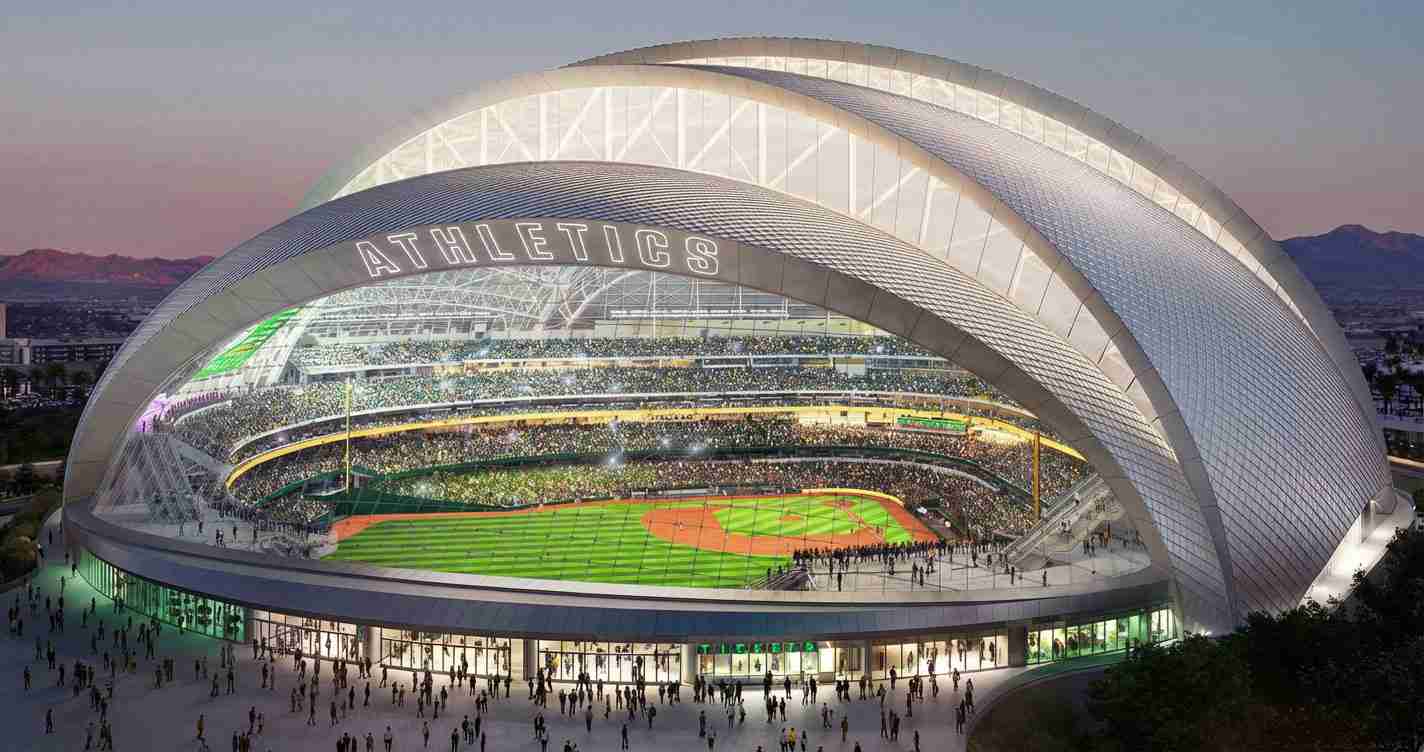
The stadium, designed by Bjarke Ingels Group (BIG) in collaboration with HNTB, will feature five overlapping arched volumes — a distinctive metal‑shelled form widely nicknamed the “Armadillo”. The design includes a large cable‑net glass wall, domed lounges and compact foul territories, with about 84% of seats between the foul poles to bring fans closer to the action (architectural report).
The ballpark will occupy 9 acres of a 36‑acre Tropicana site at Tropicana Avenue and Las Vegas Boulevard, a parcel cleared after the Tropicana resort was demolished in October 2024. Plans for the remaining land call for a Bally’s‑branded hotel, casino and entertainment complex tied to the ballpark development (MLB announcement).
Construction progress and schedule
Pre‑groundbreaking work included land‑use approvals and early foundation work: Clark County approved zoning in April 2025 and caisson drilling began by mid‑May. By late June, crews had poured portions of the first deck in the outfield and nearly half of the ballpark decks overall. The fifth of six buttresses to support the roof was nearing completion, with the sixth scheduled for spring 2026.
Key upcoming milestones: steel erection inside the bowl begins March 2026, roof steel visible by June 2026, and the frame forming through summer and early fall 2026. Escalators and major deliveries are on the schedule to follow. The general contractor is a Mortenson–McCarthy joint venture, and the project targets full completion in January 2028 so the A’s can play the 2028 MLB season in the new home (Review‑Journal timeline; construction updates).
Funding, approvals and public role
The financing blends private and public support. Nevada and Clark County committed up to $380 million in public funds through a mix of tax credits and a special tax district created by Senate Bill 1 (passed June 2023). Final lease, non‑relocation and development agreements were approved by the Las Vegas Stadium Authority in December 2024. The arrangement includes a long‑term plan for the A’s to occupy and ultimately buy and maintain the facility under a 30‑year rent‑free framework, according to project documents and reporting (ESPN; Review‑Journal).
Relocation context and transition plan
The Las Vegas move follows years of unsuccessful stadium efforts in Oakland. After leaving the Oakland Coliseum following the 2024 season, the A’s arranged to play temporarily in West Sacramento’s Triple‑A ballpark through at least 2027 while the Las Vegas venue is built. Team communications say players will wear Las Vegas and Sacramento patches during the transition. Commissioner Manfred pointed to Las Vegas’ demographics, tourism and existing pro team success as reasons the market fits MLB’s strategy (ESPN).
What to watch next
Investigative and public interest markers: keep an eye on the final buttress completion, the start of bowl steel, steady deck pours, permitting and subcontractor deliveries, and any reports from the team or local officials about schedule or budget changes. These milestones will be critical to holding the January 2028 completion target (team construction page; Review‑Journal).
Implications for Sonoma, California
Economic ripple effects: Sonoma County businesses that depended on A’s game‑day traffic — hotels, restaurants, retail and parking — have lost a major visitor draw. The permanent relocation removes a regional tourism draw and could depress some service‑industry revenues.
Employment and contractors: Northern California contractors and specialty suppliers that worked on Coliseum projects may seek work elsewhere; while some Sonoma firms with venue experience could pursue opportunities remotely, most construction jobs will be led locally by the Mortenson–McCarthy joint venture (Review‑Journal).
Political and civic consequences: The departure raises questions about future use of the Coliseum site, regional sports planning and the merits of taxpayer subsidies for large projects. The Las Vegas public funding package may sharpen debates in Sonoma about incentives and public risk (ESPN).
Social and cultural ties: Fans, youth programs and alumni partnerships in Northern California face a changed landscape. Players wearing Sacramento or Las Vegas identifiers during the transition may help retain some ties while the franchise builds its Nevada fan base.
Practical effects for residents: Sonoma residents traveling to see A’s games must now account for distance and cost to Las Vegas, while local traffic and event pressure in Oakland may ease. Tourism agencies and promoters should adjust marketing and partnership plans accordingly.
Sources and coverage
- MLB’s announcement of the groundbreaking
- ESPN’s ceremony coverage
- Architectural reporting by Dezeen
- Stadium construction progress page
- Las Vegas Review‑Journal timeline
- Background project page
- Video from the event
Reporting notes and transparency
This story synthesizes team and league releases, architecture and construction reporting, and local Las Vegas coverage. Project timelines and construction updates came from the team’s construction page; financial and approval details reflect state and county reports tied to Senate Bill 1 and stadium authority actions. Readers can review primary sources and continuing coverage at the links above.