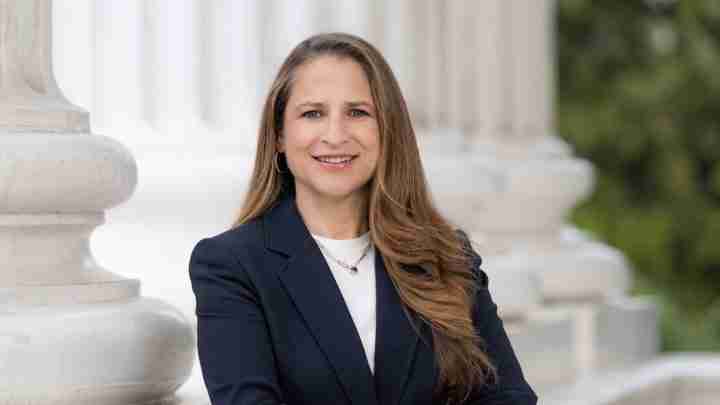
Biden-Appointed Judge Brian Murphy Draws Fresh Conservative Backlash After Multiple High-Profile Reversals
U.S. District Court Judge Brian Edward Murphy, appointed by President Biden to Massachusetts, has had several major injunctions against Trump-era immigration and vaccine policies overturned or stayed, prompting recently intensified scrutiny and conservative backlash nationwide.
- Multiple high-impact injunctions by Judge Murphy have been stayed or reversed by higher courts within roughly 15 months of his commission.
- Supreme Court intervention: The high court stepped in twice in 2025 on a third-country deportation case; the 1st Circuit paused another related order in March 2026.
- Vaccine injunction: Murphy issued a sweeping preliminary injunction blocking a new CDC child immunization schedule and actions of a newly appointed vaccine advisory committee.
- Political and legal fallout: Critics including Deputy Attorney General Todd Blanche publicly condemned the rulings, signaling aggressive DOJ appeals.
Background on Judge Murphy
Brian Edward Murphy was nominated by President Joe Biden on March 21, 2024, confirmed by the U.S. Senate on Dec. 2, 2024, and received his commission on Dec. 6, 2024. He filled the seat vacated by Judge Patti B. Saris. Murphy is from Columbia, Maryland, and began his career as a public defender (2006–2009), later practicing law in Boston and Worcester and serving in roles such as bar advocate supervisor. Supporters, including Senators Edward Markey and Elizabeth Warren, praised his civil-rights and courtroom record.
For the official biographical record see Federal Judicial Center, biography of Judge Brian Edward Murphy.
Controversial rulings and repeated reversals
Since taking the bench, Judge Murphy has issued several injunctions that directly affected core priorities of the Trump administration — most notably on immigration enforcement and vaccine policy. Legal observers note an unusual frequency of rapid appellate intervention after his trial-court orders.
Third-country deportation policy
Murphy issued injunctions blocking the Department of Homeland Security’s third-country deportation policy — a program designed to expand removals by allowing deportations to countries other than the one where migrants first entered. His orders temporarily prevented enforcement steps that court papers estimated could affect thousands of deportations.
The Supreme Court first stayed one of Murphy’s injunctions in June 2025 in a 6–3 order. A week later the court issued a second, rare 7–2 order that effectively admonished the judge for not following the earlier stay. Those twin interventions represented a high-profile rebuke from the nation’s top court. On March 16, 2026, the U.S. Court of Appeals for the 1st Circuit again paused a related Murphy decision, temporarily restoring administration enforcement while appeals proceed.
Coverage and reporting on these developments appear in Fox News, coverage of Murphy’s rulings and reactions, March 2026.
Vaccine policy injunction
On the same day the 1st Circuit acted, Murphy issued a broad preliminary injunction in a lawsuit brought by medical organizations challenging the Centers for Disease Control and Prevention’s January 2026 child immunization schedule. Plaintiffs argued the new schedule — which reduced certain required vaccines for children and altered the role of a vaccine advisory committee — violated administrative procedures.
Murphy’s order stayed the new schedule, invalidated actions taken by the newly appointed advisory committee, and paused implementation while litigation continues. In his written ruling Murphy quoted Carl Sagan, saying science is “the best we have,” and emphasized the public-health efficacy of vaccines.
Patterns and legal reactions
Taken together, the rulings show a pattern of trial-court injunctions followed by swift appellate stays or reversals. Within approximately 15 months of his commission, Murphy faced at least four higher-court interventions: two Supreme Court stays in 2025, a 1st Circuit pause in March 2026, and an active appeal of the vaccine injunction. That rapid sequence has intensified scrutiny and sparked debate among scholars about the proper bounds of trial-court discretion.
“How many times can Judge Murphy get reversed in one year? The same day he is stayed for repeatedly refusing to follow the law, he issues another activist decision. We will keep appealing these lawless decisions, and we will keep winning.” — Deputy Attorney General Todd Blanche (post on X)
Legal commentary: George Washington University law professor Jonathan Turley warned of a “stiff arm” response by higher courts to trial-level overreach, while University of Minnesota scholar Ilan Wurman cautioned about a perceived “double standard” in handling major policy disputes. Appeals have already been filed in both the immigration and vaccine matters; the Department of Justice has stated it will continue to pursue appeals.
Implications for Sonoma, California
Economic impact: A pause in federal vaccine rules could create uncertainty for Sonoma County hospitals, clinics, and school-entry requirements — potentially affecting staffing, immunization campaigns, and federal funding tied to public-health priorities.
Political consequences: Sonoma voters tend to be moderate-to-liberal on health and social policy; local officials may face pressure to clarify county vaccination policies and public-health outreach while national court headlines shape local campaigns.
Social effects: Families with young children, immigrant households, and healthcare workers may experience confusion or heightened anxiety — from school enrollment questions to concerns about immigration enforcement.
Cultural relevance: Sonoma County values public safety, family health, and community cohesion; debates over vaccine mandates and immigration policy intersect with those priorities and may spur local education efforts.
Practical guidance for residents: Parents should check with Sonoma County Public Health and local school districts for current vaccination rules. Healthcare providers should be prepared to document vaccination histories carefully. Immigrant-serving organizations should monitor developments and offer updated information about federal policies and legal resources.