Newsom’s high-speed rail flap deepens as transport chief admits errors and full system now pegged at $126 billion
California’s high-speed rail — sold to voters in 2008 for $33 billion — has ballooned to a $126 billion estimate in 2026, with no full SF–LA route built and a scaled-back Central Valley segment eyed for 2033.
- Voters approved the plan in 2008 at a projected cost of $33 billion for a San Francisco–Los Angeles route (Proposition 1A): Proposition 1A.
- Full system now estimated at roughly $126 billion, implying an approximate $90 billion funding gap: full system cost at roughly $126 billion.
- Plan scaled back to a 171-mile Central Valley segment between Merced and Bakersfield, with the earliest meaningful opening projected for 2033: 171-mile Central Valley segment between Merced and Bakersfield.
- Critics say billions spent with little to show — about $15 billion invested over many years and no operational trains; oversight reports and congressional releases flagged this concern: Senate Commerce Committee release.
Background and history
The California high-speed rail project was sold to voters in 2008 as a fast, modern link between San Francisco and Los Angeles. At the time, official estimates put the price tag near $33 billion and promised a roughly three-hour trip, helping secure passage of Proposition 1A.
Nearly two decades later, that vision has been scaled back and re-priced. State officials now estimate the full system would cost roughly $126 billion — nearly four times the original projection. That figure covers the complete San Francisco-to-Los Angeles line, not just the Central Valley segment currently under development, implying a funding shortfall of about $90 billion (full system estimate).
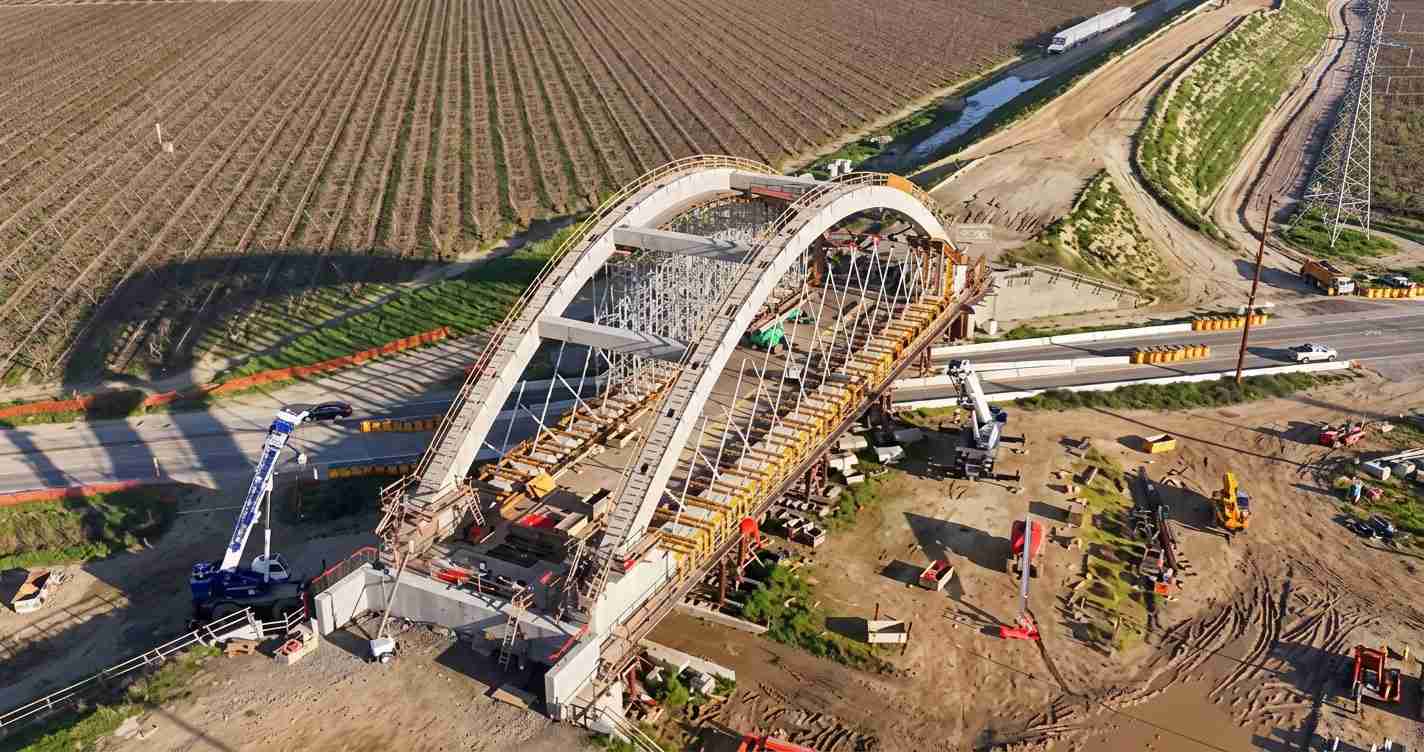
Progress to date is limited. The most visible work sits in the Central Valley, around Fresno, where concrete pillars and unfinished structures have prompted locals to mock parts of the project as “Stonehenge.” Outside the valley, there are no continuous tracks connecting the major population centers (project footage and reporting).
Admissions from state officials
Project leaders have acknowledged mistakes. California Transportation Secretary Toks Omishakin told reporters some criticism “was very fair” and said both the public and officials “underestimated” what it would take to deliver the project. He also stated he believes the state can secure remaining funds: “The entire amount [is] not there today. But do we believe we can get those funds to get the— the project done? Absolutely” (Omishakin remarks).
Governor Gavin Newsom has tempered earlier promises, acknowledging by 2019 that there “simply isn’t a path from San Francisco to LA” under the then-current plan, calling the project “years behind” and “wildly over budget,” while stopping short of rejecting the idea outright (related federal commentary).
Political blowback and blunt criticism
Republican leaders and conservative critics seized on the setbacks as an example of wasteful government spending. Rep. Vince Fong called the project a “complete bait and switch” and “the quintessential example of government waste and mismanagement” (news clips).
On the federal side, the U.S. Department of Transportation and Secretary Sean P. Duffy criticized the project’s progress, noting that despite billions spent the project produced little operational progress compared with other major works. That review led to the termination of up to $4–$4.2 billion in federal grants in 2025 amid concerns the state could not meet deadlines tied to the Central Valley buildout (DOT briefing).
The Senate Commerce Committee released a report critical of past and present leaders for continuing to pour money into a project that has not produced a single operating high-speed rail line; senators and watchdogs urged stronger oversight (Senate Commerce Committee release).
Legal fights and federal pullback
California contested the federal decision to cut grants and briefly pursued legal action, calling the federal government an “unreliable partner.” That lawsuit was later withdrawn. Federal funding cuts reshaped the funding picture and heightened pressure on state leaders to find new money, exacerbating the roughly $90 billion funding gap (coverage; DOT memo).
Controversies beyond dollars
The rail authority’s CEO faced a formal probe that raised questions about conflicts of interest, a situation confirmed by the governor’s office (probe reporting).
In early 2026, bills emerged that would narrow public access to some inspector general records tied to the rail authority. Critics warned of “a veil of secrecy,” while supporters argued limited exemptions were necessary for sensitive materials; the transparency debate intensified public concern (CalMatters report; CapRadio coverage).
Local reactions and the “Stonehenge” image
Where construction is visible, residents have grown skeptical and often mocking. In Fresno, unfinished concrete columns and empty rights-of-way prompted the “Stonehenge” nickname — shorthand for a project that looks like modern ruins to some. That image travels easily on TV and social media and has become a powerful symbol for critics (visual reporting).
Implications for Sonoma, California
Economic impact: Sonoma County likely will not see the direct economic gains promised by a full SF–LA line anytime soon. The scaled-back Central Valley route does not connect the North Bay or Sonoma directly; future spurs or extensions would require far more funding and years of planning, leaving local benefits uncertain (regional implications).
Transportation options: For Sonoma residents and commuters, the absence of a fast rail link maintains pressure on road and air travel. Regional agencies may need to pursue incremental investments in existing rail, bus rapid transit, and airport links to address congestion and climate goals while the larger project remains stalled (federal briefing on alternatives).
Political consequences: The project’s troubles could shape local and state politics in Sonoma. Voters who supported Proposition 1A or subsequent funding measures may feel betrayed if promised benefits never materialize. Lawmakers and candidates could push for tighter fiscal oversight or alternative transportation priorities that more directly serve Sonoma residents (senate oversight release).
Social and cultural effects: Sonoma’s environmental and transit-minded constituencies may be divided. Some will press for continued investment in rail as a climate solution, while others will point to cost overruns and management problems as reasons to prioritize local projects with clearer benefits (transparency debate coverage).
Practical concerns: Local governments and transit agencies should prepare for a future in which federal funding for large rail projects is less reliable. Sonoma authorities may need regional funding tools, public–private partnerships, or targeted state grants for near-term improvements to roads, rail connections to the Bay Area, or expanded commuter services (policy context).
Reporting and sources
- YouTube briefing and reporting clips on project progress and official comments: YouTube briefing & coverage (WgUYXpZ5zuw) and YouTube probe reporting (VSD5OwJkT8s).
- U.S. Department of Transportation commentary and related materials: DOT briefing and op-ed.
- U.S. Senate Commerce Committee release on project spending and outcomes: Senate Commerce Committee release.
- Reporting on proposed exemptions to inspector general records and transparency debates: CalMatters: record-exemption and CapRadio: veil of secrecy.
Conclusion
The saga of California’s high-speed rail — from a $33 billion promise in 2008 to a $126 billion estimate in 2026 — raises hard questions about project management, public trust, and how the state will pay for major infrastructure amid shifting federal support. Sonoma leaders and residents are watching as officials try to square ambition with the realities of funding, oversight, and delivery.
“The entire amount [is] not there today. But do we believe we can get those funds to get the— the project done? Absolutely.” — California Transportation Secretary Toks Omishakin