Jackie and Shadow lay egg again: Big Bear Lake eagles return to nest after raven attacks, watched live on Big Bear Eagle Cam
Big Bear Lake’s beloved bald eagles, Jackie and Shadow, laid a third egg on Feb. 24, 2026, observed live on the Friends of Big Bear Valley Eagle Nest Cam, offering hope after earlier eggs were lost to raven attacks.
Key takeaways
- New egg laid Feb. 24, 2026: Jackie produced the egg at about 2:30 p.m., visible on the FOBBV live feeds.
- Earlier losses: Two eggs from Jan. 23 and Jan. 26 were destroyed by ravens on Jan. 30, when adults were away (reported by CBS News).
- Incubation timeline: Bald eagle eggs incubate roughly 35 days, so this egg would be expected to hatch in late March–early April if viable (CBS News).
Key information
- When: Jackie and Shadow produced a new egg at about 2:30 p.m. on Feb. 24, 2026, as seen on the Friends of Big Bear Valley (FOBBV) Eagle Nest Cam (primary view) that streams 24/7. Source: CBS News and the FOBBV live feeds.
- Egg losses: The pair lost two earlier eggs — laid Jan. 23 and Jan. 26 — to raven attacks on Jan. 30, when the adults were away for several hours. Source: CBS News.
- Incubation: Bald eagle eggs typically incubate about 35 days before hatching; if this egg follows that timetable, hatch-time would likely be late March to early April. Source: CBS News.
- Pre-laying behavior: The pair showed mating, nest maintenance and food exchanges in the week leading up to the egg (Feb. 20–23), recorded on FOBBV camera channels and public uploads (see FOBBV cam recording 1 and FOBBV cam recording 2).
What happened at the nest on Feb. 24
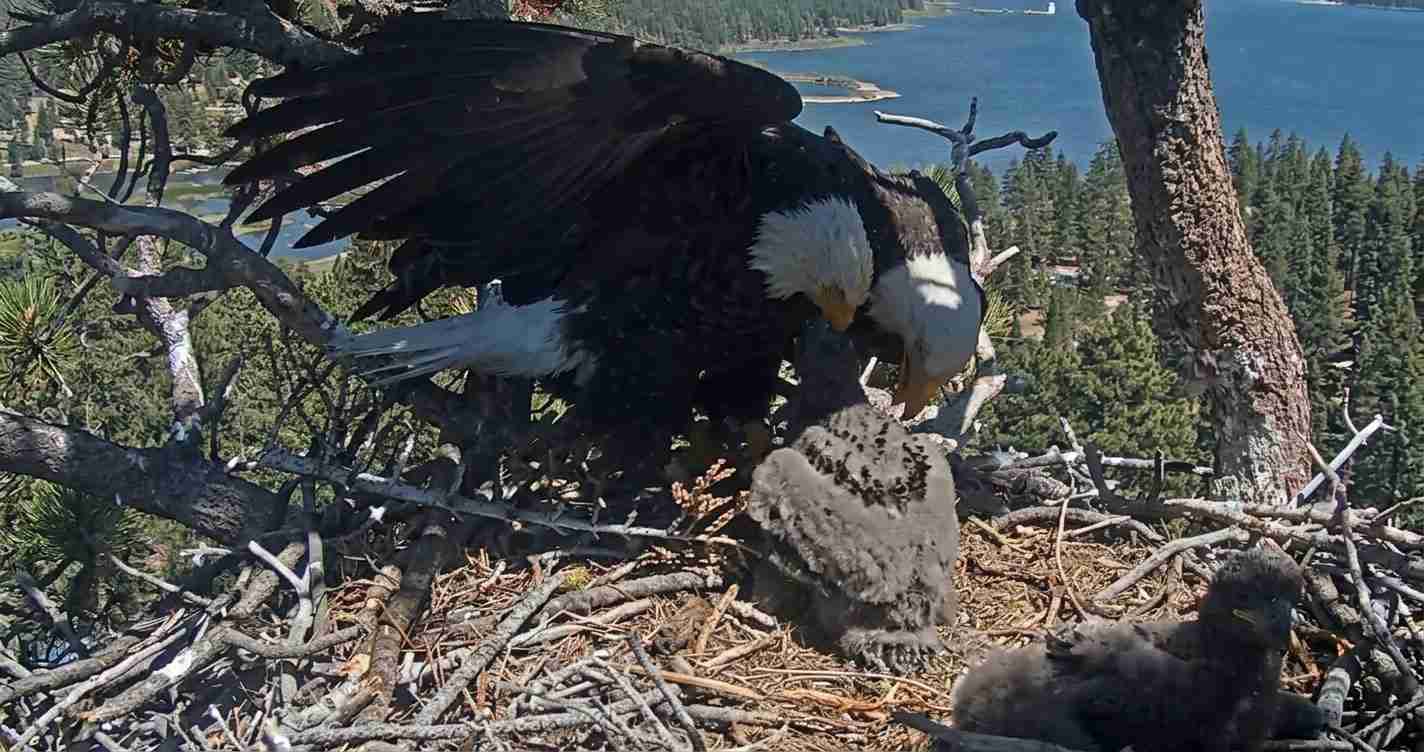
Live viewers on the Big Bear Eagle Cam watched Jackie briefly stand, inspect the newly laid egg and re-settle on it while Shadow returned minutes later. The moment was captured live and replayed across social channels tied to the nest feed (FOBBV live feeds).
Temperatures were mild that afternoon with clear skies and no snow cover — a sharp contrast to earlier in the week when snow briefly blanketed the nest area, according to camera timelines and local weather observations (CBS News).
“Jackie did a great job and she is now resting.” — posted by the Friends of Big Bear Valley after the egg appeared on the live stream (CBS News).
The organization maintains both a primary nest cam and a wide-view Cam 2 to give viewers multiple angles on nest activity (FOBBV live feeds).
Timeline and the raven attacks
This new egg follows a difficult start: Jackie laid eggs on Jan. 23 and Jan. 26. On Jan. 30, ravens invaded while the adults were away for several hours and destroyed both eggs — an event widely followed on the live camera and across social media (CBS News).
Viewer response: The losses drew global support. Video evidence and subsequent behaviors showed Jackie and Shadow did not abandon the nest; they increased mating activity and repaired the nest, actions that preceded the Feb. 24 egg (see FOBBV cam recording 1 and FOBBV cam recording 2).
The eagles, the cam and local stewardship
Identities: Jackie (female) is unbanded and estimated hatch year 2012; she has been tied to the nest since September 2016. Shadow (male) is unbanded and estimated hatch year 2014; he has been present since May 2018. These IDs come from long-term observation and community records (FOBBV cam recording 1).
Cam and outreach: The Friends of Big Bear Valley operates the live Big Bear Eagle Cam and posts continuous coverage, drawing thousands worldwide. The cam is a public education tool and a focal point for local conservation outreach; FOBBV posts updates across its site and social channels (FOBBV live feeds; YouTube).
What this season’s data tell us about nesting success
Since the first recorded bald eagle chick hatched in Big Bear Valley in 2012, the nest has seen about a dozen eggs laid; only a fraction hatched and reached adulthood. National and local monitoring suggest roughly 50% of eaglets survive to adulthood, underscoring the fragility of nests and importance of habitat protection (CBS News).
Successes provide context: the pair raised two eaglets, Sunny and Gizmo, in 2025, and had successful fledges in 2019 and 2022 — showing the nest can produce young when predation and disturbance are limited (CBS News).
Pre-laying behaviors and signs to watch
Camera logs and public uploads show a flurry of activity Feb. 20–23: Shadow delivered fish after a storm; Jackie ate and shared food; the pair mated multiple times and performed nestorations (repair/rearrangement). Video examples: FOBBV cam recording 2 and FOBBV cam recording 1.
Note: Bald eagles often lay eggs at roughly three-day intervals; observers will watch for additional eggs. Incubation usually takes about 35 days from laying to hatching (CBS News).
Investigative questions and conservation concerns
The Jan. 30 raven attack raises questions about nest vulnerability and appropriate human interventions. Ravens are natural opportunists; they can destroy unguarded eggs when adults are away. The cameras provide a rare, continuous look at interspecies dynamics at this well-known nest (FOBBV live feeds).
Key investigative questions include:
- What conditions led Jackie and Shadow to be away long enough for ravens to attack? (Cameras provide timing but not always context.)
- Can community measures — increased monitoring, rapid reporting, or habitat management to discourage raven loafing — reduce losses without disrupting wild behavior?
- How do weather, food supply and human disturbance intersect to shape nesting decisions?
Answers depend on science-based study and collaboration between local stewardship groups (like FOBBV), wildlife agencies and researchers. The Big Bear Eagle Cam is an asset because it provides continuous observational data to inform solutions (FOBBV live feeds).
Implications for Sonoma, California
Economic impact: Sonoma County could benefit from nature-based tourism and virtual streams modeled after Big Bear’s cam — attracting donations and remote visitors.
Political consequences: The Big Bear story may encourage conservation-minded voters to support wildlife funding, restoration projects and community-based monitoring.
Social and cultural effects: Live cams create shared experiences; Sonoma classrooms and nature groups can use footage for life-cycle science and stewardship lessons, reinforcing norms around habitat respect and responsible recreation.
Practical applications: Local groups can set up cams, develop rapid-response volunteer networks, and promote public information campaigns during nesting season. The ~50% survival statistic highlights why habitat protection matters (CBS News).
Watch and participate
The Friends of Big Bear Valley continues to post updates and host live feeds that make following Jackie and Shadow possible. Viewers can watch on the primary Big Bear Eagle Cam and the wide-view Cam 2, and follow recaps via the FOBBV YouTube channel and other social platforms.
Authorities and stewards encourage respectful viewing and non-interference so the pair can incubate and tend any future chicks without additional stress (CBS News).
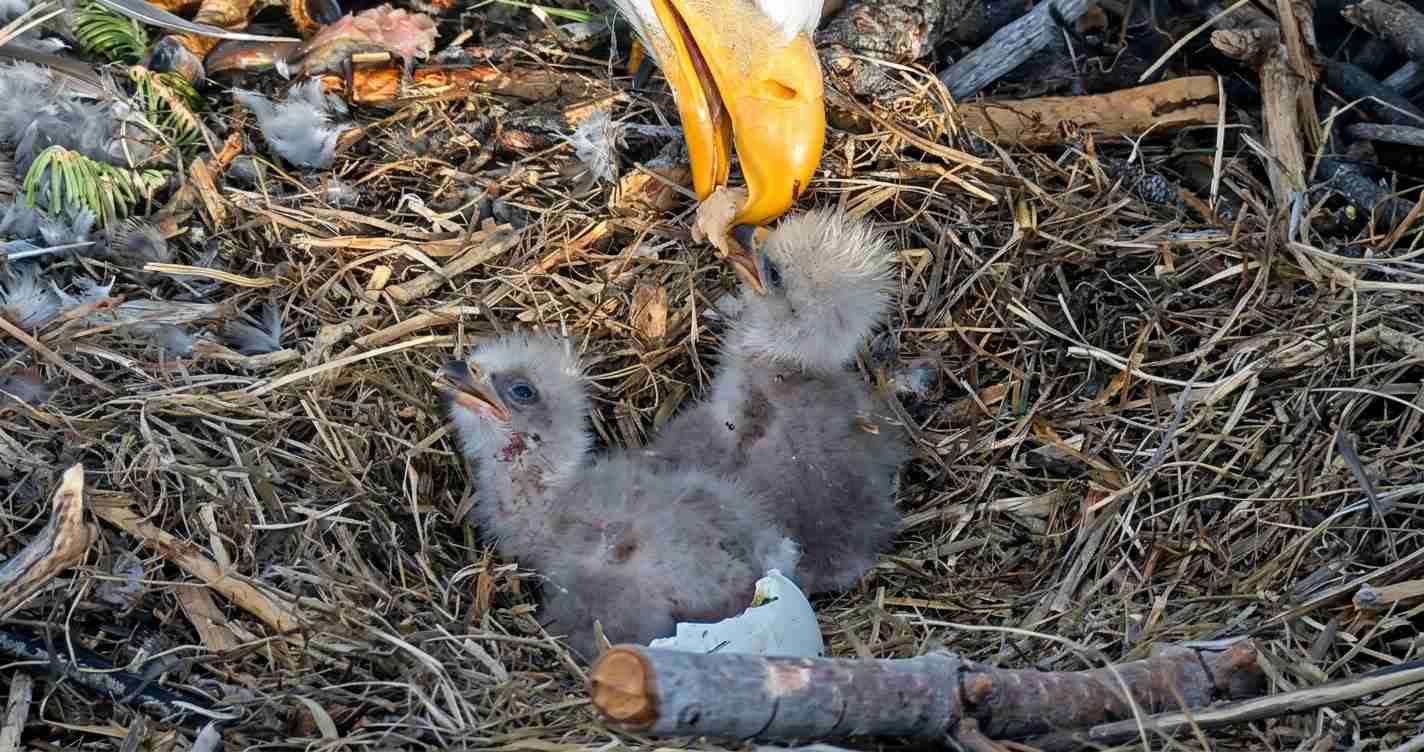
Observers worldwide will be watching as Jackie and Shadow begin incubation, hoping this egg survives the coming weeks and adds another chapter to the nest’s long-running story (FOBBV live feeds).