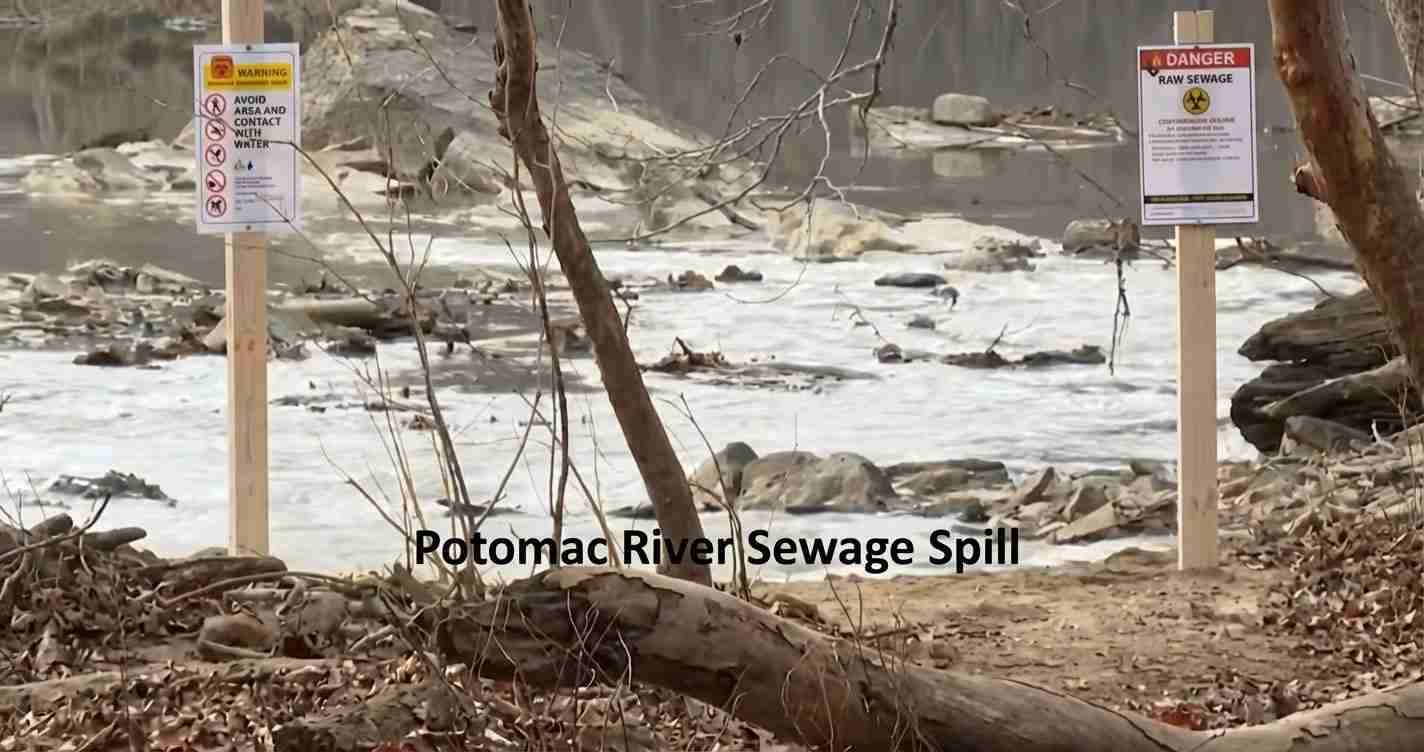
Potomac Interceptor repairs completed; DC Water says full flow restored after massive Potomac River sewage spill
DC Water said emergency repairs to the Potomac Interceptor are complete and full wastewater flow restored after the Jan. 19 collapse that sent an estimated 240–300 million gallons of untreated sewage into the Potomac River, officials.
- Repairs finished: Potomac Interceptor repairs completed, DC Water announced that full flow has been restored.
- Rapid response: Crews worked around the clock since Jan. 19 and installed a temporary bypass on Jan. 24 to limit further releases.
- Scale of the spill: The collapse released an estimated 240–300 million gallons of raw sewage — among the largest spills in U.S. history; independent testing showed extremely high bacteria counts (Washingtonian testing, WSWS reporting).
- Federal aid: A presidential disaster declaration unlocked FEMA, EPA and U.S. Army Corps support for cleanup and monitoring.
What happened: the pipe, the spill and immediate risks
The Potomac Interceptor is a 72-inch reinforced concrete sewer line built around 1962 that carries wastewater from Virginia and Maryland suburbs to DC Water’s Blue Plains treatment plant. When the pipe collapsed on Jan. 19 near Clara Barton Parkway in Montgomery County, Maryland, it released an estimated 240–300 million gallons of untreated sewage into the Potomac River before crews could stop the leak (2026 Potomac River sewage spill).
Independent testing by environmental groups found E. coli levels near the site as high as 12,000 times accepted safety limits, and elevated counts downstream at recreation spots such as Fletcher’s Cove. Cold weather reduced bacteria in some areas, but officials warned that other pathogens and chemical contaminants can linger even after E. coli counts fall (Washingtonian, WSWS).
Emergency response and engineering fixes
Within days of the collapse, DC Water coordinated with the National Park Service to set up an emergency bypass. On Jan. 24, crews used part of the C&O Canal near Lock 10 to pump wastewater 2,700 feet around the damaged section into undamaged pipe. The bypass was later upgraded with additional pumps and a steel bulkhead to block off and drain the damaged segment for repair (official incident summary).
DC Water described the work as emergency stabilization and sewer restoration. After weeks of intensive repairs, the utility announced the Potomac Interceptor repairs completed and confirmed that full flow had been restored and sections of the C&O Canal drained as part of site restoration — key steps in the broader cleanup.
“Repairs are complete and full wastewater flow has been restored,” DC Water said in agency updates summarizing on-site stabilization and restoration steps.
Federal, state and local roles in the response
D.C. Mayor Muriel Bowser declared a public emergency to speed work and seek reimbursement. President Donald Trump approved a federal disaster declaration under the Stafford Act, enabling FEMA support and allowing the EPA and U.S. Army Corps of Engineers to take lead roles in on-site response and cleanup (disaster declaration details).
The federal role prompted political dispute: the president criticized state and local leaders and raised concerns about summer America250 events, while Maryland Gov. Wes Moore noted the broken section sits on federal land and emphasized Maryland’s assistance. The tension highlighted questions over oversight and responsibility during complex infrastructure emergencies (coverage of federal-state dynamics).
Environmental and health monitoring
State and regional health and environmental agencies have continued testing water quality along the Potomac. Officials stressed that public drinking water supplies were not affected because intakes are upstream and the drinking system is separate from the sanitary sewer system.
Nevertheless, authorities issued public health advisories warning against contact with river water and suspended shellfish harvesting in affected areas until tests show safety. Agencies emphasized that bacteria and other contaminants can linger, posing risks to wildlife and people even after visible pollution fades (testing and advisories).
Legal fallout and community claims
At least one lawsuit has been filed by recreational boater Nicholas Lailas seeking compensation for property interests and loss of use and enjoyment of the Potomac River. The complaint alleges users and property owners suffered financial and recreational losses because of the spill.
Conservation groups and local leaders renewed calls for long-term investment in aging wastewater infrastructure to prevent similar disasters — a central theme in the legal and political aftermath.
Why the failure matters nationally
Experts and advocates say the Potomac rupture underscores a nationwide problem: many sewer systems are aging and operating beyond intended lifespans. The Interceptor was roughly 60 years old and had been flagged as vulnerable. Tens of thousands of smaller overflows occur annually across the U.S.; the Potomac event is a stark example of what can happen when critical, aging infrastructure fails (analysis, WSBTv reporting).
Potomac Interceptor repairs completed and DC Water sewer restoration — what’s next
DC Water and federal partners will continue environmental monitoring and site restoration: ongoing water and shoreline testing, targeted cleanup, and habitat restoration where needed. Officials cautioned that the disappearance of visible pollution does not mean the risk is gone — continued testing is essential to determine when recreation and harvesting can safely resume (continued monitoring).
Implications for Sonoma, California
Economic impact: Though distant, Sonoma may feel indirect effects as jurisdictions nationwide compete for federal and state grants to upgrade aging sewer systems. Local utilities, tourism-dependent businesses, and county budgets should review capital priorities.
Political consequences: Infrastructure failures become political flashpoints. Sonoma leaders should expect questions about maintenance, oversight, and emergency roles among city, county and regional agencies. Clear responsibilities and transparent communication reduce finger-pointing.
Social and cultural effects: The incident shows how recreation and public health advisories can quickly affect outdoor locales. Sonoma officials should bolster public outreach on safe recreation during water-quality events and highlight investments in preventive maintenance to reassure residents and visitors.
Practical applications: Local utilities and emergency managers can adopt lessons from the Potomac response: review sewer-conveyance age and condition, test bypass/rapid-response options, establish mutual-aid agreements, and prepare public messaging templates to shorten response times and reduce impacts (recommendations).
Sources and further reading
- Wikipedia entry on the 2026 Potomac River sewage spill
- Washingtonian coverage of the spill and testing
- World Socialist Web Site reporting on the incident and response
- KOMO/Komonews reporting on ongoing crisis warnings
- WSBTv reporting on national sewer infrastructure concerns
Reporting includes public statements and agency announcements; details on repair completion and restored flow come from DC Water and associated federal and local agency updates as reported by sources above.