Pulse‑Fi Turns Wi‑Fi Signals Into Contactless Heart Rate Monitoring
Researchers at the University of California, Santa Cruz developed Pulse‑Fi, a system that turns ordinary Wi‑Fi signals into contactless heart rate monitoring, offering affordable, non‑intrusive tracking for remote care, assisted living, and everyday wellness and research.
Key takeaways
- Contactless pulse sensing: Pulse‑Fi uses ordinary Wi‑Fi transmitters and receivers to detect tiny heartbeat‑caused changes in radio waves (UCSC news release).
- Machine learning separation: Signal processing plus an ML model separates heartbeat effects from background noise (Tom’s Hardware).
- Low‑cost hardware: Works with inexpensive microcontrollers like the ESP32 and benefits from more capable boards such as Raspberry Pi for higher precision (Tom’s Hardware).
- Practical range & accuracy: Effective up to ~10 feet and can estimate heart rate within about 0.5 bpm after five seconds of monitoring (UCSC; Tom’s Hardware).
Key information
Pulse‑Fi measures tiny variations in Wi‑Fi radio waves caused by subtle tissue motion from each heartbeat. Receivers capture those changes and feed them to signal‑processing routines and a machine learning model trained to identify the heartbeat pattern and ignore background motion and noise.
The research team documented methods and test results in a UCSC summary (UCSC news release) and media outlets reported on performance and hardware trade‑offs (Tom’s Hardware).
How Pulse‑Fi works
Wi‑Fi waves travel through and around the human body; each heartbeat causes a minute motion in tissue that slightly alters the speed and strength of those waves. Receivers track subtle variations in amplitude and phase.
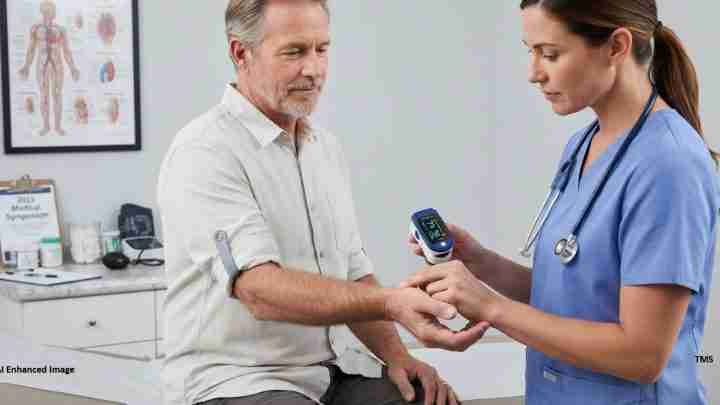
The team created training datasets pairing Wi‑Fi signal patterns with medical‑grade pulse oximeter readings to provide a trustworthy ground truth for supervised learning. A dedicated ML model then learns to extract the heartbeat component and filter out other moving objects and ambient noise (UCSC; Tom’s Hardware).
Hardware: Prototypes use low‑cost microcontrollers such as the ESP32 (about $5–$10) for data capture; more capable boards like Raspberry Pi (~$30) improve signal fidelity and reduce error rates (Tom’s Hardware).
Accuracy and performance
Published tests show Pulse‑Fi estimating beats per minute within about 0.5 bpm after five seconds of monitoring; accuracy improves with longer windows and stronger receivers. The researchers described performance as approaching clinical‑grade levels and noted robustness to common indoor movement.
Range in trials reached roughly 10 feet from the subject, enabling room‑level monitoring without physical contact (UCSC; Tom’s Hardware; Earth.com).
Research published and team
The work was presented at the 2025 IEEE International Conference on Distributed Computing in Smart Systems and the Internet of Things (DCOSS‑IoT) and summarized in a UCSC news release (UCSC).
Project leads: Professor Katia Obraczka leads the project, with Ph.D. candidate Nayan Bhatia and visiting researcher Pranay Kocheta among the primary contributors (Tom’s Hardware).
Advantages and potential uses
Pulse‑Fi’s chief attraction is removing the need to wear a sensor. Many homes and care facilities already have Wi‑Fi—placing a low‑cost receiver in a room could enable unobtrusive monitoring without changing daily routines.
- Remote patient monitoring for telehealth and clinicians.
- Assisted living and elder care where residents may forget or resist wearables.
- Hospitals and shelters: continuous contactless observation in resource‑constrained settings.
- Wellness tracking: long‑term pulse and potential breathing‑rate monitoring for sleep and respiratory screening (UCSC; Earth.com).
Technical and ethical considerations
Technical limitations include sensitivity to moving pets, fans, furniture, and multiple people in the same room; the ML model must continually improve to separate pulse signals from ambient interference.
Privacy and consent are critical. Contactless heart‑rate monitoring could be used without someone’s knowledge if safeguards are absent. Health data are sensitive and may be governed by laws such as HIPAA when handled by medical providers. Responsible deployment requires clear policies, encryption, and limits on retention (UCSC; ENN).
“Security experts and ethicists emphasize policies, encryption, and data‑retention limits before broad use.”
Ongoing work and limits
Researchers are expanding capabilities to track breathing rate, improve multi‑person performance, and evaluate diverse building layouts and router interference. Larger, real‑world trials are needed before hospitals or public health programs can rely on Pulse‑Fi as a replacement for certified medical devices.
Experts caution that while lab and small‑scale tests are encouraging, the system remains a promising adjunct rather than a plug‑and‑play clinical replacement at present (Tom’s Hardware; Earth.com).
Implications for Sonoma, California
Sonoma County — with its network of home‑care providers, retirement communities, and rural households — could see local benefits from contactless monitoring.
Economic: Low‑cost hardware and open research could encourage North Bay startups and makers to develop products and services around Wi‑Fi health tracking.
Health policy: Public health agencies and county supervisors would need to balance benefits against privacy and regulatory concerns; clinics serving older adults could use contactless monitoring for remote check‑ins while ensuring consent and data protection.
Social and practical uses: Families and assisted‑living providers may find unobtrusive monitoring reduces caregiver worry. Emergency shelters, evacuation centers, and temporary clinics—used frequently during wildfire seasons—could deploy low‑cost Pulse‑Fi setups to monitor vulnerable people when wearables and full medical staffing are limited.