Yellowstone’s Echinus Geyser roars back after nearly six years, sparking scientific interest and visitor curiosity
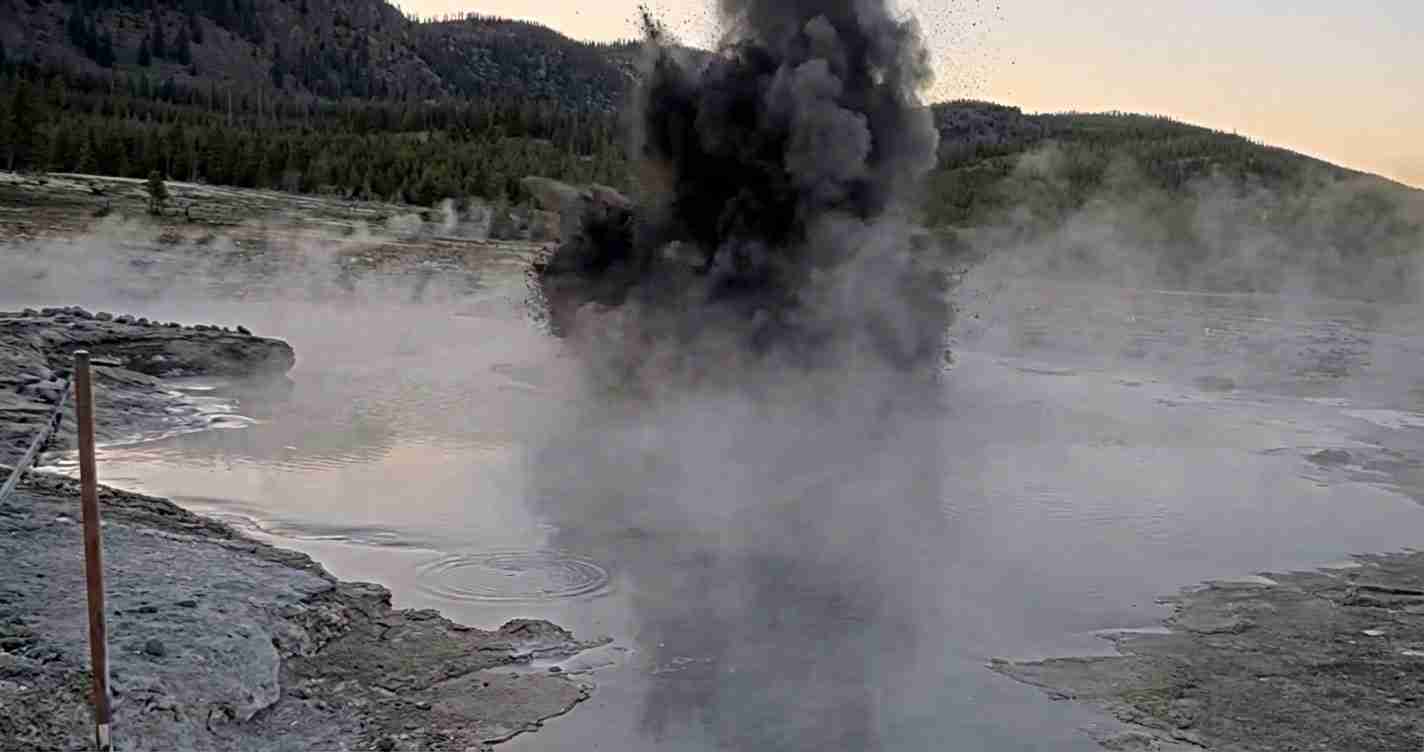
Echinus Geyser, the world’s largest acidic geyser in Yellowstone’s Norris Geyser Basin, erupted repeatedly in February 2026 — its first activity since December 2020 — producing about 40 blasts reaching 20–30 feet and drawing attention from scientists and visitors alike.
- Renewed activity: About 40 eruptions recorded in February 2026, with bursts typically 20–30 feet high and lasting 2–3 minutes.
- Acidic and unique: Echinus is Earth’s largest acidic geyser (pH ~3.3–3.6) with striking mineral colors and a spiny, sea‑urchin–like cone.
- Hydrothermal, not magmatic: Scientists report normal background seismicity and characterize the events as hydrothermal, driven by groundwater–heat interactions.
- Local relevance: The episode may boost public science interest and modestly influence tourism and research outreach in places such as Sonoma, California.
What happened at Echinus in February
Timing and cadence. The first eruption after nearly six years of dormancy occurred on Feb. 7, 2026, with smaller bursts on Feb. 9, 12 and 15. On Feb. 16 the geyser shifted into a higher cadence, erupting every two to five hours for several days. Park observers and the Yellowstone Volcano Observatory logged about 40 events for the month.
Eruption style. Individual bursts typically lasted two to three minutes and reached about 20–30 feet (6–10 m). After each eruption the pool level dropped sharply and refilled over roughly an hour, a pattern consistent with earlier active phases such as in late 2017. By late February, reports indicated no continued eruptions and the geyser appeared to return to a quieter state.
Why this geyser is unusual: acidic and active
Most Yellowstone geysers are neutral to alkaline, but Echinus is distinctly acidic — its pool measures roughly pH 3.3–3.6, similar to orange juice or vinegar. This acidity arises from mixing between acidic gases and neutral waters rather than an aggressive rock‑eating fluid, allowing the geyser’s plumbing to persist.
Temperatures around the site have been measured up to about 176.5°F (80.3°C), with eruption-related spikes near 158°F (70°C). The chemistry produces vivid mineral deposits — iron, aluminum and traces of arsenic — and silica‑coated spiny rocks that give the cone its sea‑urchin appearance. The cone name dates to the late 1800s, when mineralogist Albert Charles Peale described the feature.
Coverage and reporting on the geyser’s chemistry and appearance are available via major outlets such as ABC News and Popular Science.
History and variability of Echinus
Echinus was more predictably active in the late 20th century, with occasional eruptions reported up to 75 feet. After 1998 its behavior changed — likely because it lost a secondary water source that once helped power larger eruptions — and frequency and height declined. Brief active phases occurred in 2017–2019, with sporadic events in previous decades, including a documented ~15 events in 2010–2011. Today the geyser is considered unpredictable, and visitors sometimes arrive to find only a quiet pool despite viewing platforms nearby.
Monitoring: what scientists tracked in February
Park scientists and the YVO tracked temperature surges and logged each eruption. USGS temperature graphs for Norris showed early‑February surges that preceded eruptions, matching field crew observations and webcam footage. Seismicity remained at background levels; YVO reported about 74 small earthquakes in the period (largest ~M2.4), which is not indicative of magmatic movement.
YVO: the February events are hydrothermal, not magmatic, rooted in groundwater and heat interactions rather than volcanic eruptions.
“Clogged” hydrothermal system — what that means and what we don’t know
Some reports described the revival as the result of a “clogged” hydrothermal plumbing system that suddenly cleared, releasing trapped steam and hot water. That mechanism — mineral buildup, sediment, or shifts in underground flow temporarily blocking channels — fits common geyser behavior. However, direct subsurface confirmation (for example, imaging a cleared channel) is not available for Echinus; scientists say the pattern is consistent with flow changes but stress that more monitoring and study are needed.
For background on this interpretation see reporting in Popular Science and USGS updates.
Public access and safety
No park closures or public‑safety alerts were issued in connection with Echinus’s February activity. Visitors may observe from established boardwalks and viewing platforms in Norris Geyser Basin; park rules requiring distance and staying on designated trails remain critical because acidic water and thin ground are hazardous. Remote monitoring and public webcams offer alternatives for those who cannot travel.
Implications for Sonoma, California
Economic impact
Renewed attention to Yellowstone’s geothermal features could produce modest tourism benefits for Sonoma County — wineries, hospitality and outdoor recreation businesses may see interest from travelers planning multi‑destination Western trips. Local operators might consider bundled marketing tied to national‑park travel.
There is also potential for growth in research and eco‑tour offerings: Sonoma museums, natural‑history groups and tour operators could develop programming that links local geology with broader Western geothermal phenomena.
Political consequences
The episode may renew public focus on funding for national parks and scientific monitoring. Sonoma’s congressional delegation and local leaders could see constituent interest in federal park budgets and scientific grants, and the event underscores the value of investments in monitoring and emergency communications.
Social effects
The reawakening can boost public engagement with earth science. Sonoma schools, libraries and science centers may capitalize on this interest with programs about geothermal systems, pH and hazard monitoring. Reports also serve as a reminder for respectful, safety‑conscious visitation to fragile landscapes.
Cultural relevance
Echinus’s vivid colors and unusual chemistry offer a visual and cultural touchpoint for regional storytelling, exhibits and art projects that celebrate shared Western natural heritage.
Practical applications for residents
Travel planning: Sonoma residents planning Yellowstone visits should check the National Park Service and USGS/YVO pages and webcam feeds for current conditions.
Educational programming: Educators and interpreters can use the Echinus case to teach pH, thermal energy and the distinction between hydrothermal and volcanic activity, drawing on public resources and news coverage.
Sources and further reading
- U.S. Geological Survey — Yellowstone Volcano Observatory: Echinus Geyser back in action
- NBC Montana: Echinus geyser erupts in Yellowstone for first time since 2020, then every few hours
- ABC News: Yellowstone’s rare acidic geyser active after years of dormancy
- Popular Science: World’s largest acidic geyser erupts in Yellowstone
- NDTV: World’s largest acidic geyser in Yellowstone erupts after 6 years
- KTVQ: World’s largest acidic geyser erupts again in Yellowstone after years of silence
- YouTube (news segment): Yellowstone eruption coverage