Artemis II lifts off: First crewed lunar mission since Apollo sends four astronauts on 10-day moon flyby
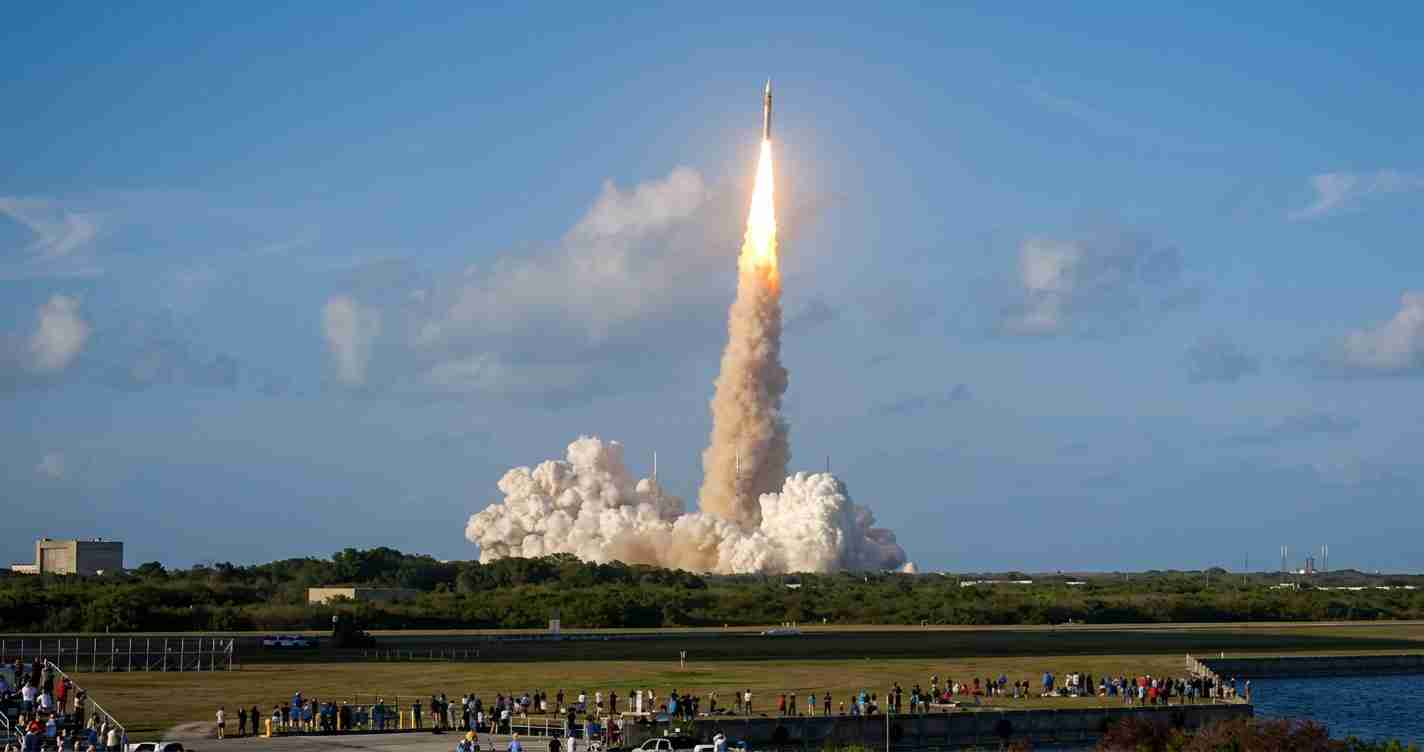
Cape Canaveral, Florida (Sonoma Times) – Artemis II launched April 1, 2026, from Kennedy Space Center, sending four astronauts on a roughly 10‑day free‑return flyby of the Moon to validate NASA’s Space Launch System and Orion spacecraft for future crewed lunar landings.
Key takeaways
- Launch: Liftoff at 6:35:12 p.m. EDT on April 1, 2026, from Launch Complex 39B; SLS reached supersonic speeds and the core stage separated about eight minutes after liftoff.
- Crew: Commander Reid Wiseman, Pilot Victor Glover, Mission Specialist Christina Koch (NASA) and Mission Specialist Jeremy Hansen (Canadian Space Agency); historic firsts beyond low Earth orbit for Glover and Koch.
- Mission profile: Roughly 10 days on a free‑return lunar flyby with a closest approach near ~8,000 km on day six; splashdown expected around April 10–11.
- Purpose: End-to-end validation of SLS and Orion deep-space systems ahead of crewed lunar landings planned for Artemis IV and V in 2028.
Launch and first hours
Artemis II successfully launched at 6:35:12 p.m. EDT on April 1, 2026, from Launch Complex 39B at the Kennedy Space Center. The Space Launch System (SLS) climbed through the atmosphere, passed transonic and reached supersonic speeds in roughly eight minutes; the core stage completed its burn and separated as planned while the upper stage continued to insert Orion and the crew into a high Earth orbit. For official event details see the Kennedy Space Center event page and live mission updates at the NASA live updates and mission blog.
Flight plan and in-orbit tests
Over the first day the crew will run comprehensive checks of life support, communications, navigation and propulsion aboard Orion. If those checks pass, controllers will perform the second-day burn to send the spacecraft onto a free‑return trajectory that loops past the Moon and returns to Earth without a lunar orbit insertion burn — a safety‑first profile to demonstrate systems before more complex missions.
- On-orbit verification: Life support, long‑distance communications, navigation and propulsion tests.
- Trajectory: Second-day burn sets Orion on a free‑return path toward the Moon.
- Close approach: Planned closest pass ~8,000 km from the lunar surface on about day six.
Historic crew and notable firsts
The four-person crew — Reid Wiseman (commander), Victor Glover (pilot), Christina Koch (mission specialist) and Jeremy Hansen (mission specialist, Canadian Space Agency) — represents diverse experience and international partnership. Victor Glover will be the first person of color and Christina Koch the first woman to travel beyond low Earth orbit. Hansen’s presence marks a significant international milestone for the Canadian Space Agency.
“We have a beautiful moonrise, we’re headed right at it,” Commander Reid Wiseman said moments after liftoff, capturing the emotion and purpose of the flight.
Program context, testing and delays
Artemis II follows the uncrewed Artemis I flight in 2022 and arrives after a series of delays and intensive testing. The SLS core stage arrived at Kennedy Space Center in July 2024 and rolled to Pad 39B in March 2026 after troubleshooting weather and technical issues, including hydrogen fuel leaks and a helium flow issue on the upper stage. Engineers resolved these problems ahead of the April window.
Why this mission matters: Artemis II is explicitly a test mission — engineers must validate that SLS delivered the vehicle to the planned trajectory and that Orion’s systems operate as designed with humans on board. Success will clear the path for more complex steps on Artemis IV and V, which aim to support lunar landings around 2028.
Possible sights for the crew
On about the sixth day, when Orion swings around the Moon’s far side, the spacecraft will come within roughly 8,000 kilometers of the lunar surface. That pass places the crew farther from Earth than humans have been in decades and could afford them rare visual phenomena — including a potential partial solar eclipse if Orion blocks the Sun from their vantage point. NASA will use the close flyby to test near‑Moon communications and navigation.
Tracking the mission
The public can follow Artemis II in near‑real time via the NASA live updates and mission blog, the Artemis Real‑time Orbit Website (linked from NASA’s coverage) and the NASA mobile app. Media outlets are providing live updates and analysis throughout the flight.
Implications for Sonoma, California
Economic impact: While Artemis II does not directly deliver aerospace contracts to Sonoma, the launch can stimulate tourism and spending around viewing parties, museum exhibits and educational programming.
Workforce and education: Local schools and colleges — including Sonoma State University and Santa Rosa Junior College — have opportunities to expand STEM programming, host live‑stream events and use NASA lesson plans to inspire careers in aerospace engineering, mission design and space policy.
Civic and cultural effects: The mission offers a bipartisan occasion to promote STEM investment and civic engagement. Community viewing events, library programs and planetarium features can serve as intergenerational learning opportunities while highlighting international cooperation and inclusion.
Practical note for residents: use the NASA live updates and mission blog and the agency’s mobile app for tracking; local media and organizations will likely host streams and educational events.
Questions to watch
- Will in‑flight system tests meet expectations, and are any anomalies identified and resolved?
- How will Artemis II’s results affect schedules, budgets and readiness for Artemis IV and V (planned for crewed lunar landings around 2028)?
- What role will commercial and international partners play based on Artemis II outcomes?
Source links and further reading
- Kennedy Space Center event page
- NASA live updates and mission blog
- NASA news release
- Artemis II (Wikipedia)
- Planetary Society — What to expect from Artemis II
- CBS News live updates
Reporting from Kennedy Space Center; Sonoma Times