Jackie and Shadow eaglets hatch: Big Bear bald eagles welcome two new chicks after turbulent season
Big Bear Valley’s resident bald eagles, Jackie and Shadow, welcomed two eaglets over April 4–5, 2026, after a turbulent season that included raven predation and a second clutch monitored live by Friends of Big Bear Valley.
Key takeaways
- Two eaglets hatched: the first about 9:30 p.m. Saturday, April 4; the second just before 9 a.m. Sunday, April 5.
- Staggered hatching: a pip was recorded on Friday and full hatching followed ~24–48 hours later, producing siblings about 12 hours apart.
- Season setback: an initial four-egg clutch suffered raven predation; Jackie laid a second clutch on Feb. 24 and Feb. 27 that produced these chicks.
- Live monitoring: Friends of Big Bear Valley’s 24/7 nest camera provided footage used by local media and researchers.
Main story
Hatching timeline and process
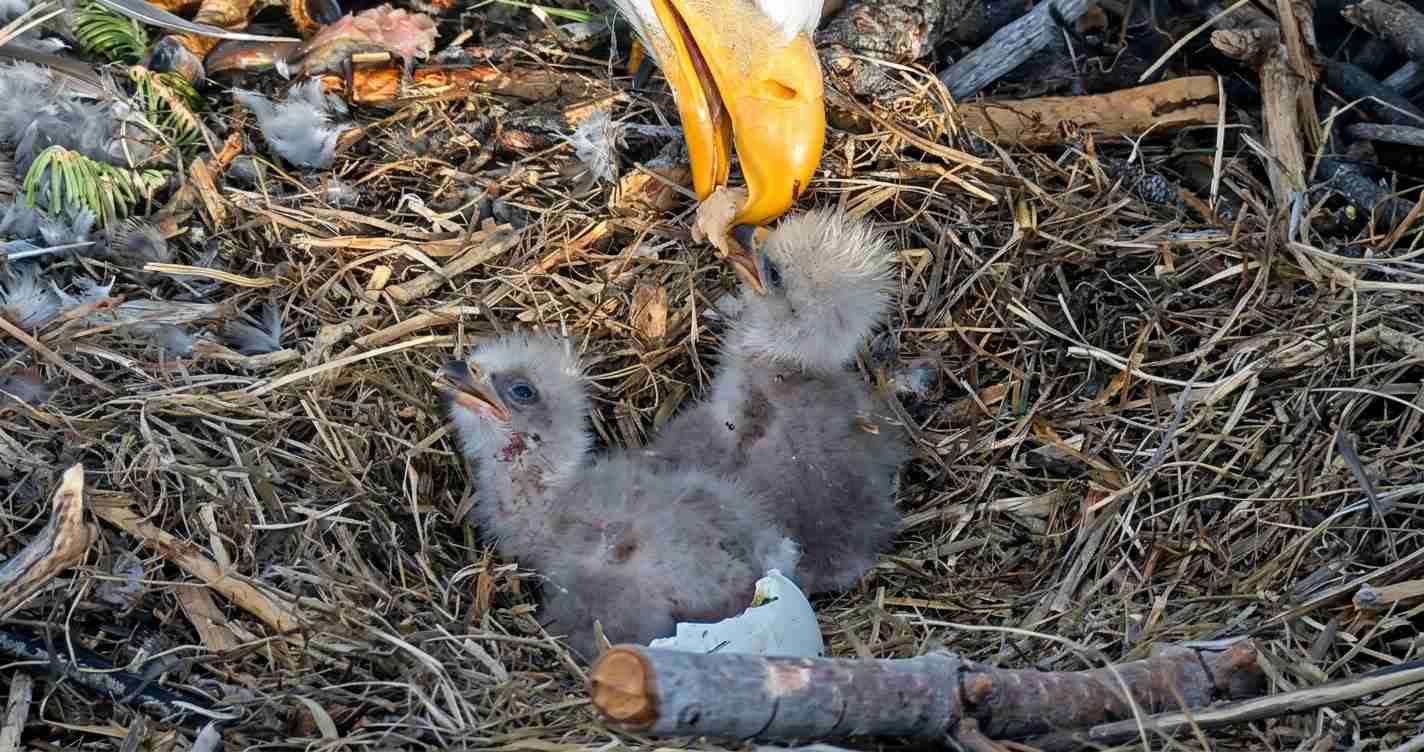
Video captured the first signs of life on Friday when a chick began to pip — the initial break of the internal membrane and shell that lets the chick take its first breath. Friends of Big Bear Valley shared early footage showing shell movement and faint chirps; experts note that a pip can precede full hatching by 24–48 hours.
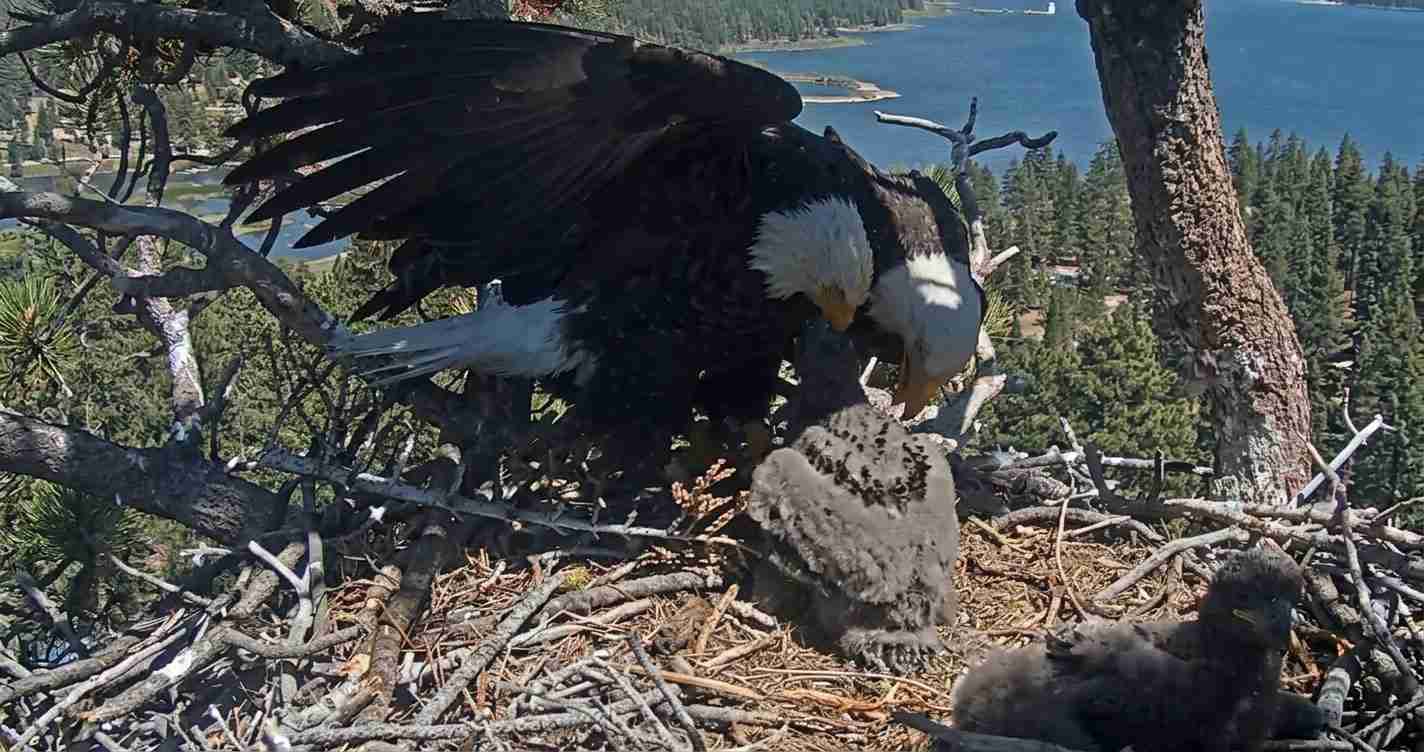
The first eaglet completed hatching late Saturday night, about 48 hours after the recorded pip. The second egg, which also showed a pip, produced a sibling just before 9 a.m. Sunday — roughly 12 hours after the first chick emerged. On the nest cam a parent tucked both chicks under its body for warmth at about 9 a.m., protecting them from their first exposure to daylight.
“A pip is only the start: chicks often work for 24 to 48 hours before fully freeing themselves from the shell.”
Sources documenting the hatching and timeline include Friends of Big Bear Valley and CBS Los Angeles.
Nest history and the season’s challenges
This breeding season began with promise and then a setback. Jackie’s first clutch included four eggs, but ravens raided the nest while the adults were away and destroyed two eggs. After that loss, Jackie laid a second clutch on Feb. 24 and Feb. 27, which produced the two chicks that hatched April 4–5.
Raven raids on large nests are not unheard of, but they underscore the fragility of wild nests even when parents return quickly. Investigators and conservation volunteers will keep watching the nest closely to document how parents balance food and warmth for two chicks and how predators or human activity might affect the nest later in the season.
Reports and background on the raids and clutch dates are available from CBS Los Angeles, ABC7 and BigBear.com.
Jackie and Shadow: local celebrities with a conservation story
Jackie (hatched ~2017) and Shadow (hatched ~2014) have lived near the FOBBV camera since 2017 and have been the subject of live-streaming and community interest since 2018. They previously reared eaglets in 2019, 2022 and 2025, and followers have sometimes named chicks (e.g., Sunny and Gizmo).
Friends of Big Bear Valley operates the camera and uses footage for education, outreach and habitat advocacy — an example of community-based wildlife monitoring that engages schools, volunteers and the public.
Background and profile material can be found at Friends of Big Bear Valley, Wikipedia and a feature in the Los Angeles Times.
What researchers and local stewards will watch next
- Feeding: frequency and type of food deliveries will shape survival and growth.
- Sibling dynamics: staggered hatching can create a size gap; observers will note whether the older chick outcompetes the younger.
- Predator pressure: continued raven activity remains a concern and volunteers will document any further raids.
Friends of Big Bear Valley’s live camera gives scientists, volunteers and the public a rare window to track these dynamics in real time: Friends of Big Bear Valley.
Implications for Sonoma, California
Though Jackie and Shadow nest near Big Bear Lake, their story offers lessons for Sonoma and the wider Bay Area in several areas:
- Economic and tourism interest: live nest cams attract statewide viewers and suggest models for Sonoma nature and wildlife tourism and virtual events (Friends of Big Bear Valley).
- Education and outreach: nest-cam footage provides classroom-ready material on life cycles and ecology (CBS Los Angeles).
- Volunteer stewardship models: FOBBV’s community monitoring demonstrates best practices for rapid reporting and coordinated responses when nests face threats (Friends of Big Bear Valley; BigBear.com).
- Conservation policy: events like this inform policymakers and provide talking points for riparian and forest restoration efforts (see Los Angeles Times).
- Community connection: live wildlife feeds can support mental well-being and community gatherings in Sonoma libraries, senior centers and schools (CBS Los Angeles; Friends of Big Bear Valley).
Sources and further reading
- Friends of Big Bear Valley (nest cam and background)
- CBS Los Angeles: “Jackie and Shadow egg pip”
- Wikipedia: Jackie and Shadow
- ABC7: report on egg pipping and nest watch
- BigBear.com blog: Big Bear Lake bald eagles
- Los Angeles Times: profile on Jackie and Shadow
- YouTube nest footage referenced by local reporting
Reporting includes information from Friends of Big Bear Valley, CBS Los Angeles, ABC7, BigBear.com, Los Angeles Times and public records.