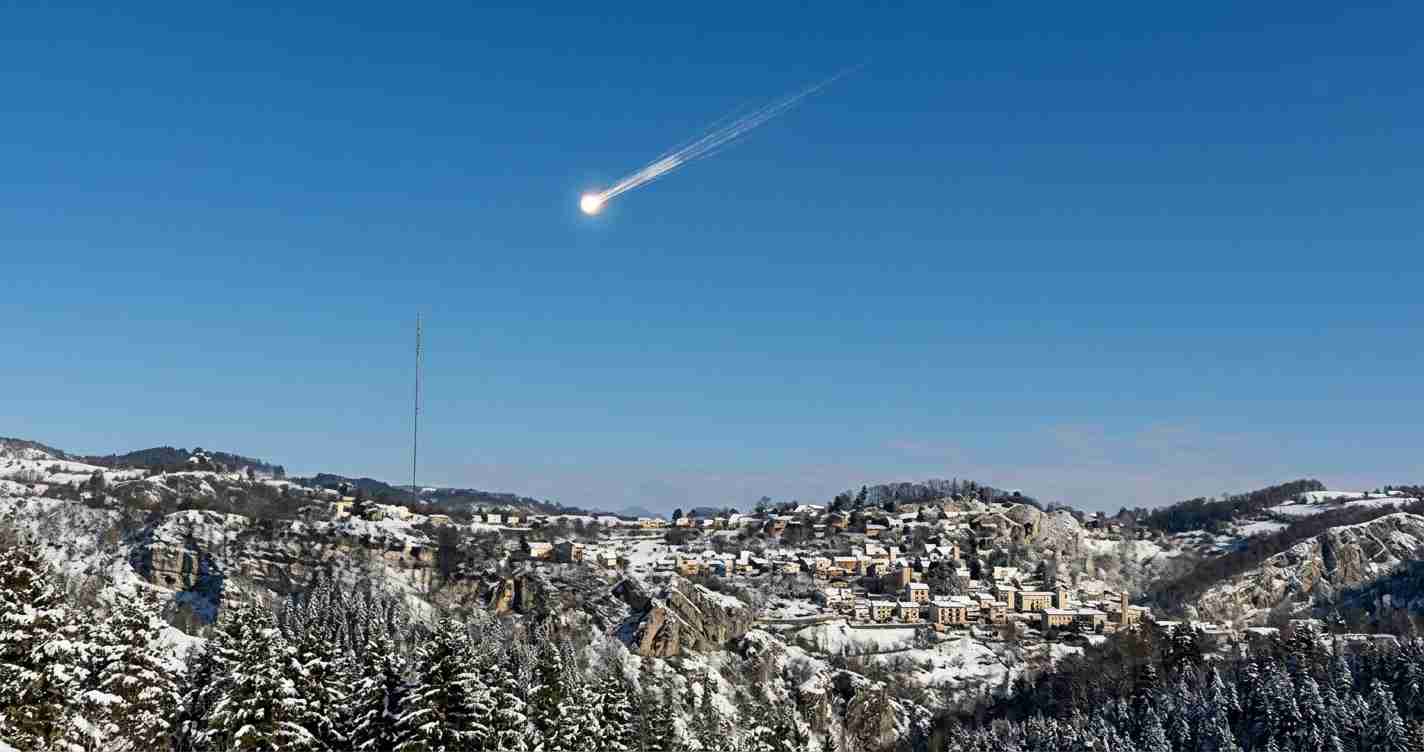
Valley City meteor lights up Midwest sky, sends sonic booms across Ohio; fragments likely fell in Medina County
A roughly 6-foot, 7-ton asteroid exploded over Northeast Ohio just before 9 a.m. ET on March 17, 2026, producing a brilliant daylight fireball and powerful sonic booms; fragments are believed to have fallen toward Medina County.
Key takeaways
- What: A small asteroid ~6 feet (≈2 meters) across, ~7 tons, entered as a bright daylight fireball.
- When: Just before 9 a.m. ET on March 17, 2026.
- Where: First seen above Lake Erie near Lorain; fragmented above Valley City with fragments likely toward Medina County.
- Energy & effects: Traveled ~40,000–45,000 mph, released energy ≈250 tons of TNT; sonic booms rattled homes, no reported injuries.
Main story
What happened
Shortly before 9 a.m. ET on March 17, witnesses across Northeast Ohio and neighboring states reported a very bright object streaking through the daytime sky. The fireball was first observed roughly 50 miles above Lake Erie near Lorain, sped southeast about 34 miles, and fragmented near Valley City at an altitude of about 30 miles. Assessments were shared by local and national outlets, including CBS News and the Los Angeles Times.
Observations, video and audio
The National Weather Service (NWS) office in Pittsburgh captured striking video of the streak, and NWS Cleveland and other stations recorded booming sounds and vibrations. Multiple cameras, including a bus-garage feed in Olmsted Falls, captured footage and audio of successive explosive noises; some feeds experienced frame loss during the event. Local coverage and community reporting are documented by Signal Cleveland.
Scientific analysis and size
Experts from NASA’s Meteoroid Environment Office and regional observers estimated the object at about 6 feet (≈2 meters) across and roughly 7 tons in mass. Described as a likely low-density, “fluffy” mix of rock and metal, the meteoroid brightened dramatically as it encountered denser air layers. Traveling at an estimated 40,000–45,000 mph, it discharged energy roughly equivalent to 250 tons of TNT when it fragmented, producing a pressure wave that reached the ground as loud booms and vibrations. NASA and summarizing reports are available via National Today and other outlets.
Trajectory, fragments and search efforts
Trajectory reconstructions place the fireball on a southeast path from Lake Erie, fragmenting above Valley City. After breakup, pieces continued on a southerly course toward parts of Medina County, identified by scientists and local officials as the most likely fall zone. As of reporting, no confirmed recoveries had been announced, and searches — coordinated by local emergency managers and amateur meteor enthusiasts — were informed by trajectory data and eyewitness accounts. Additional reporting on the search and community updates appears at Signal Cleveland and follow-up summaries like Los Angeles Times.
Eyewitnesses and media
Reports to the American Meteor Society came from witnesses across multiple states and parts of Canada, underscoring how widely visible the fireball was. Video and cellphone audio captured the rumble and sharp booms many described as a rare, startling experience; NWS video also noted a brief green flash associated with the bolide. For consolidated observational reports, see the American Meteor Society.
Official response and safety
Local emergency management agencies reported high call volumes but no confirmed damage or injuries. Lorain County Emergency Management and other county officials fielded calls and checked for impacts; none were found at the time. NWS staff and scientists noted vibrations and emphasized that most of the object likely ablated in the atmosphere, with only small fragments — if any — reaching the ground.
“Many meteors burn up high in the atmosphere; events this bright in daylight and loud at ground level are less common, but they provide important data for researchers,” said meteorologists and NASA researchers monitoring the event.
Why scientists are watching
Events like this refine understanding of small asteroids, fragment patterns and atmospheric breakups. Researchers such as Bill Cooke of NASA’s Meteoroid Environment Office analyze trajectories and energy releases to improve models and alerts. The proliferation of public video and audio aids precise reconstruction of paths and fragmentation.
Implications for Sonoma, California
Though Sonoma is thousands of miles from Ohio and faces no direct hazard from the Valley City meteor, the event offers local lessons:
- Economic: Increased public interest in space science may boost museum and planetarium attendance; local programs can capitalize on heightened curiosity.
- Emergency planning: Use this as an opportunity to review alert systems and protocols for managing sudden, unusual reports (e.g., widespread booms triggering many 911 calls).
- Social and cultural: Host public explainers linking local culture (wine-country outreach, community centers) with astronomy education.
- Practical tips: How residents should report sightings and handle potential meteorite finds: see guidance below.
Reporting guidance and safety tips
If you witness a bright fireball or suspect a meteorite find, follow these steps:
- Report sightings to the American Meteor Society — reports help scientists reconstruct paths.
- If you believe you’ve found a meteorite: do not dig on private property without permission. Document the find with photos, GPS coordinates, and contact local universities, museums, or geological surveys for guidance.
- Keep emergency contacts handy and follow official alerts. A loud boom alone typically does not imply widespread damage; report visible falling debris, smoke, or hazards to authorities.
Source links for reporting and verification
Primary sources and further reading:
Officials and agencies continue to analyze data and coordinate meteorite searches in Medina County while monitoring reports from residents and observers across the region.