Route 66 at 100: Planning the Mother Road RV Trip That Brings History to Life
Route 66, established in 1926, spans 2,448 miles from Chicago to Santa Monica and became the storied “Mother Road,” shaping migration, wartime logistics and roadside culture — now preserved and celebrated as Historic Route 66.
- Route basics: Route length and endpoints — 2,448 miles, Chicago (Grant Park) to Santa Monica Pier.
- When to go: Best seasons are spring (April–May) and fall (September–October) for milder weather and fewer crowds.
- Trip planning: Full drives usually take two to three weeks; RVs let you follow original alignments and stay near small-town attractions.
- Centennial 2026: Events and higher visitor interest are expected around November 11, 2026 — book centennial-weekend stays early.
Origins and how a simple designation became a national icon
Route 66 was officially designated on November 11, 1926. Planners such as Cyrus Avery (Tulsa) and John Woodruff (Springfield) advocated a diagonal corridor that stitched together hundreds of rural towns across eight states rather than the straight-west courses of earlier roads. The diagonal alignment helped farmers move grain and produce to market and opened new patterns of travel and commerce across the Midwest and Southwest. This history is summarized by the U.S. Department of Transportation Highway History.
The name Mother Road
entered American culture through John Steinbeck’s 1939 novel The Grapes of Wrath, framing Route 66 as a route of migration, hope and possibility. Over the decades the corridor also earned the moniker “The Main Street of America” as gas stations, diners, motels and souvenir shops sprang up to serve travelers.
Route 66 during migration and wartime service
Dust Bowl migration: During the 1930s, thousands of families used Route 66 to travel west to California. Estimates place the Dust Bowl migration into California at roughly 200,000 people, many relying on highways like Route 66 to reach work and shelter (U.S. Department of Transportation Highway History).
World War II: The road also served military logistics, moving equipment and personnel and connecting to defense industries on the West Coast. Route 66 passed near key sites such as Fort Leonard Wood in Missouri, reinforcing its strategic value during the mid-20th century (traveler recollections and histories).
Firsts, kitsch and pop culture
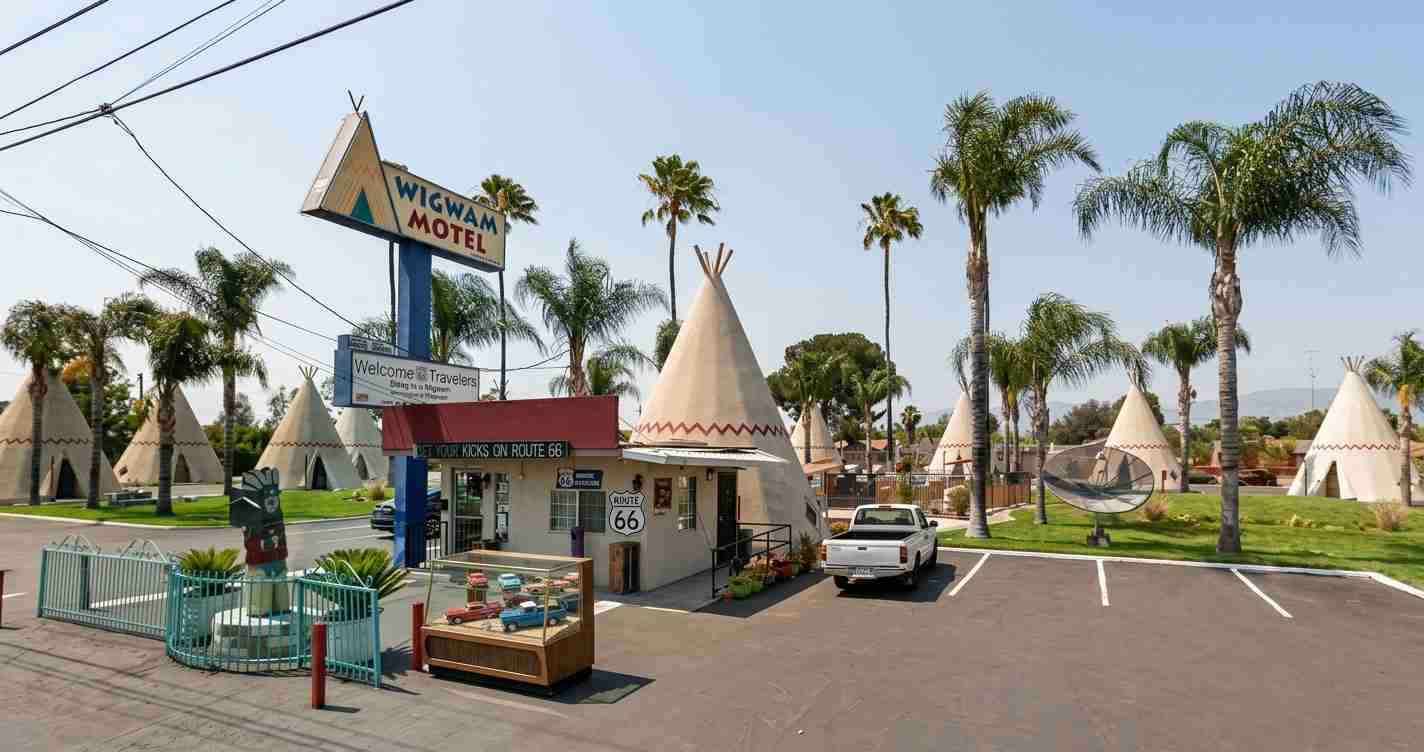
Route 66 is linked to early roadside innovations — including one of the first drive-through restaurants — and a robust roadside culture of neon signs, quirky motels, giant sculptures and vintage pumps. That roadside personality has been preserved by collectors and local communities, turning the corridor into a subject of books, songs and television that cemented the Mother Road in the national imagination (Route 66 summary on Wikipedia).
Quote highlight: The Mother Road
— the phrase Steinbeck used — became shorthand for migration, resilience and Americana.
Decline, decommissioning and preservation
The Federal Aid Highway Act of 1956 launched the Interstate system. As interstates opened, traffic shifted away from Route 66; by 1970 most original alignments were replaced by faster highways. The final original stretch near Williams, Arizona, was bypassed in October 1984, and Route 66 was officially decommissioned in 1985. Preservation efforts by states, towns and private groups have since signed many segments as Historic Route 66 and built a loose network of museums and tourism initiatives (U.S. Department of Transportation Highway History; Route 66 Centennial materials).
Planning an RV trip for the 2026 centennial
As Route 66 turns 100 in 2026, centennial events and heightened interest are expected around November 11. Travelers planning RV trips should:
- Schedule: Allow two to three weeks for the full drive; pick state-by-state segments for week-long trips (centennial planning guidance).
- Timing: Spring and fall offer the most comfortable weather; summer brings heat (notably in Texas and Arizona), and winter can limit services in rural stretches.
- Why RV: Many original alignments and attractions lie far from modern freeway exits; an RV lets you follow old alignments, sleep near main streets and stay flexible. If you need one, rental platforms such as RVShare offer van and motorhome options.
- Booking: Book centennial-weekend stays early in 2026, especially near major anniversary events.
Safety and practical tips for RV travelers
- Maps and navigation: Carry paper maps and downloaded GPS files — some original stretches are poorly marked (source).
- Plan resources: Expect rural gaps in fuel, water and services; plan supplies and fueling carefully, especially in the Southwest.
- Campground capacity: Reserve campgrounds and RV parks months ahead for peak weeks and centennial events.
Implications for Sonoma, California
Economic: Though Route 66 does not pass through Northern California, Sonoma County businesses tied to hospitality and RVing may see indirect benefits from centennial-driven interest in road travel. Expect possible upticks in RV park bookings, winery stays and independent lodges as travelers extend or complement coast-to-coast trips (Route 66 Centennial; RVShare).
Planning and policy: Local planners should review seasonal campground capacity and RV access, coordinate promotions with state travel agencies, and prepare permitting and traffic strategies to handle peak travel weeks.
Community and cultural: Sonoma museums, historical societies and schools could use the centennial to stage exhibits and programming that connect local travel history to the national story of Route 66, using partnerships to teach about migration, transportation policy and mid-century cultural shifts.
Practical tips for residents: If hosting visitors or traveling in 2026, consider RV rental options such as RVShare, and check local RV park and state campground availability months in advance.
Source material and reporting notes
This article draws on federal highway history and centennial planning documents, historical summaries and preservation resources: U.S. Department of Transportation Highway History; Route 66 Centennial materials; Route 66 summary on Wikipedia; traveler recollections at Crazy Guy on a Bike; and educational humanities materials (Humanities NM Art Museum curriculum).
For RV rental options referenced here: RVShare.