Groundbreaking in Idaho Launches First Commercial-Scale Advanced Nuclear Reactors in Decades
Idaho has begun construction on the first commercial-scale advanced nuclear reactors in decades: Oklo’s Aurora powerhouse and the Department of Defense’s Project Pele microreactor at Idaho National Laboratory, a milestone for U.S. nuclear innovation and local job growth.
- Dual demonstrations: Oklo’s Aurora and the Defense Department’s Project Pele are now under construction at Idaho National Laboratory, advancing fast-reactor and microreactor designs.
- Technology and partners: Aurora uses metallic fuel and heat-pipe technology with Kiewit Corporation named as lead constructor; Project Pele is a transportable 1–5 MW microreactor for military resilience.
- Economic impact: Both projects are expected to create hundreds of construction and operational jobs and strengthen INL as a hub for advanced-reactor testing and supply chains.
- Regulatory focus: Licensing, HALEU fuel supply and technical testing at INL will inform future commercial deployments and public policy.
Key information
Oklo Inc. has broken ground at Oklo Inc. for Aurora, a commercial-scale advanced fast reactor sited at Idaho National Laboratory (INL). Industry reporting and press coverage describe the project and the groundbreaking milestones, including broader media context provided by Fox Business.
In parallel, the U.S. Department of Defense has begun construction on Project Pele, a transportable Generation IV microreactor intended for military use and resilience testing at INL. Technical context and project details have also been summarized by the American Nuclear Society.
Oklo’s Aurora powerhouse
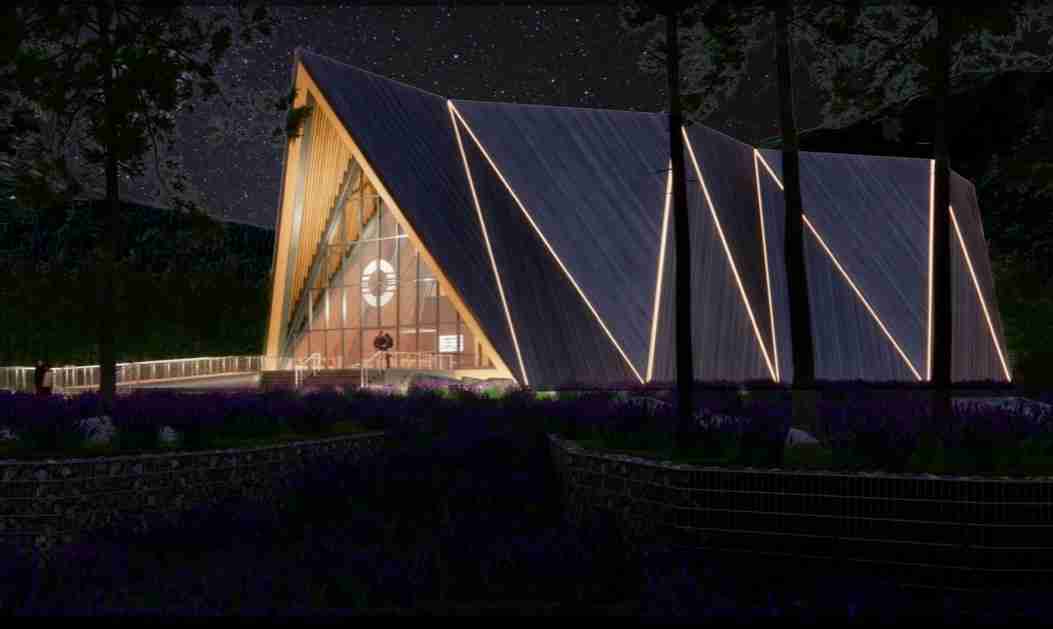
Aurora marks the first commercial-scale fast neutron reactor built in the U.S. in decades. The unit sits at INL, a long-standing federal energy research campus hosting multiple next-generation reactor demonstrations.
Aurora uses metallic fuel and draws design lessons from Idaho’s earlier Experimental Breeder Reactor II. Oklo plans to move heat from the core using heat-pipe technology into a supercritical carbon dioxide power-conversion system to generate electricity. The design can operate on fresh HALEU (High Assay Low Enriched Uranium) or recycled fuel, according to company and industry reporting (Fox Business; NucNet).
Kiewit Corporation has been named as the lead constructor for Aurora, signaling the use of experienced industrial partners and modern construction practices for a first-of-a-kind project (NucNet).
Project Pele microreactor
Project Pele is a Department of Defense initiative to assemble a transportable microreactor capable of delivering roughly 1–5 megawatts of dispatchable power for bases and forward operations where fuel delivery is difficult. The Defense Department frames the program as a path to reduce dependence on fossil fuels and increase operational resilience (U.S. Department of Energy; ANS).
Components for Project Pele are being assembled off-site and are scheduled to arrive at INL for installation and testing in 2026, where the unit will be housed in a protective structure and connected to INL’s microgrid for trials (Boise State Public Radio; DOE).
Officials describe Project Pele as the first non-naval nuclear generator construction milestone in the U.S. in nearly half a century.
Why this matters nationally
The twin projects represent a turning point for advanced reactor deployment in Idaho and for U.S. energy policy. After decades with limited commercial nuclear construction, these demonstrations test technologies that promise smaller footprints, passive safety features, modular assembly, and operation on modern fuels. Federal and state officials attended the groundbreakings, underlining the national significance and implications for energy innovation and security (NucNet; Fox Business).
Jobs, economy and the INL role
Both Oklo’s Aurora and Project Pele are expected to add hundreds of jobs during construction, plus longer-term positions for operation, maintenance, and support services. INL’s renewed role as a hub for demonstration reactors should draw contractors, suppliers, and skilled workers to eastern Idaho, boosting local business activity and tax bases (INL; Fox Business).
INL already plans a slate of experimental reactors and demonstrations before the end of the decade, positioning the lab as a focal point for testing designs intended to scale or be transported for military and civilian uses (INL).
Regulatory and technical questions
These projects are demonstrations of new technologies and still face regulatory, technical and supply‑chain hurdles. Licensing for advanced reactors and the production of HALEU fuel remain active policy and industry topics. The tests at INL will generate data regulators need to assess safety, waste handling and operational procedures for future commercial deployments (NucNet; DOE).
Sources and reporting
This article draws on reporting and releases from multiple outlets and agencies, including Fox Business, NucNet, the U.S. Department of Energy, the American Nuclear Society, Boise State Public Radio, and the Idaho National Laboratory. These sources describe the projects’ technology, timelines, and expected economic effects.
Implications for Sonoma, California
Economic impact
Although the reactors are in Idaho, Sonoma’s economy could see indirect benefits. Advanced nuclear projects create demand for specialized suppliers, engineering services, and software — areas where Northern California companies compete. Firms in Sonoma County and the Bay Area that provide precision manufacturing, controls, or AI-driven monitoring could win contracts as Oklo, INL, and defense contractors expand supply chains (Fox Business; INL).
Workforce and training
The jobs created in Idaho highlight a growing need for skilled nuclear technicians, control-systems engineers, and safety specialists. Sonoma community colleges, trade schools and universities could partner on training programs to prepare students for careers in advanced nuclear, or adapt existing curricula for roles in robotics, welding, and instrumentation that transfer across industries.
Energy and climate policy
Sonoma has aggressive climate goals. The arrival of Idaho advanced nuclear reactors signals federal interest in low-carbon firm power that can support intermittent renewables. Project Pele’s focus on resilience and off-grid power could be relevant for rural California communities facing wildfire-driven outages (DOE).
Local politics and public opinion
Nuclear projects often draw close local scrutiny. Sonoma voters and leaders tend to balance environmental protection with economic concerns. Officials here will likely follow safety, waste-handling and transportation plans developed for Idaho projects. Clear federal and industry communication about licensing, emergency planning, and waste disposition will be important to build public trust.
Cultural and community considerations
Sonoma’s wine and tourism economy values landscape, rural character and visitor safety. Any increase in industrial links to nuclear projects will raise questions among growers, hoteliers and residents about shipments, visual impacts at manufacturing sites, and regulatory oversight. Local leaders and industry groups may press for transparency and local benefit assurances if Sonoma-based businesses participate in the supply chain.
Practical applications for residents
- Job pathways: Residents with technical skills could find new work with firms supplying the Idaho projects or in remote operations roles.
- Business opportunities: Precision manufacturers, engineering consultancies and energy-service firms in Sonoma could compete for contracts.
- Emergency planning lessons: Sonoma can study Project Pele’s resilience model for backup power in remote or disaster-prone areas (DOE).
Reporting next steps
Local officials, economic development groups and trade schools should track contracting opportunities and regulatory developments tied to Idaho advanced nuclear reactors, Oklo Aurora, Project Pele, and INL’s testing schedule. Monitoring DOE and INL updates will help Sonoma leaders identify partnerships or safeguards that align with community values and climate goals (INL; DOE).
“These demonstrations at INL will provide critical data for regulators and industry as the U.S. explores the next generation of nuclear power,” — reporting synthesized from federal and industry sources.