Trump signs milk bill as Whole Milk for Healthy Kids Act becomes law, returning whole and 2% milk to school lunch lines
President Donald Trump signed the Whole Milk for Healthy Kids Act of 2025 on January 14, 2026, allowing schools in the National School Lunch Program to offer whole and 2% milk options, reversing prior federal restrictions.
- What happened: On Jan. 14, 2026, President Trump signed S. 222, the Whole Milk for Healthy Kids Act, opening school meals to whole and 2% milk and detailed in a USDA press release.
- Major changes: Schools may now offer whole (full-fat) and 2% reduced-fat milks — flavored and unflavored — and organic varieties, as reported by FoodBev and DTN.
- Other provisions: Easier access to nutritionally equivalent plant-based milks without physician notes, allergy-response training, and protections for flavored milk options were included (FoodBev; Rep. Tiffany release).
- Why it changed: The law reverses aspects of the 2010 Healthy, Hunger-Free Kids Act and follows the 2025–2030 Dietary Guidelines for Americans, which reintroduced full-fat dairy as an acceptable component of healthy patterns.
Signing: who was there and how it unfolded
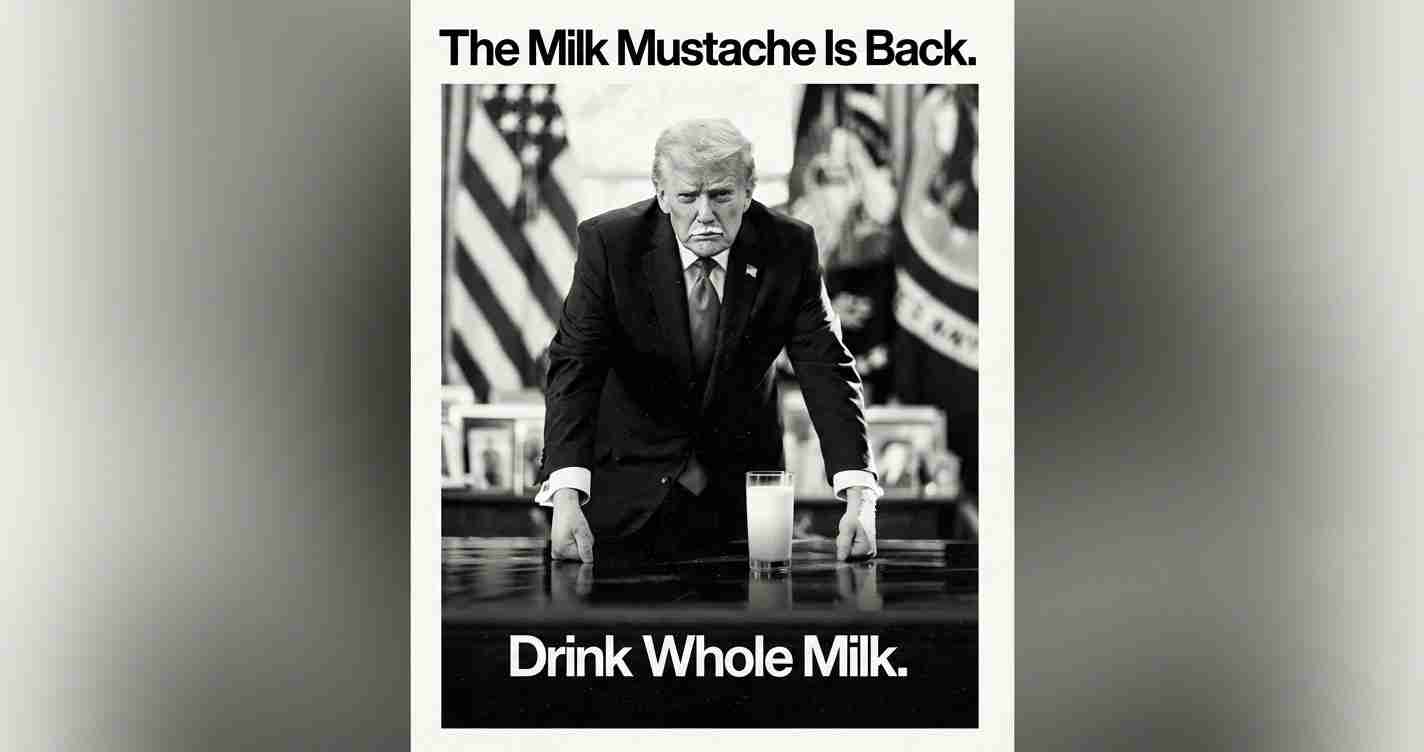
The bill was signed in the Oval Office with senior officials and stakeholders present, including USDA Secretary Brooke L. Rollins, HHS Secretary Robert F. Kennedy Jr., USDA National Nutrition Advisor Dr. Ben Carson, dairy farmers, parents and members of Congress. The White House posted a ceremonial signing video in its announcement online.
“A milestone for children’s health,” said Senate Agriculture Committee Chair John Boozman in subsequent coverage (DTN).
What the Whole Milk for Healthy Kids Act changes
The law formally allows schools participating in the National School Lunch Program and related child nutrition programs to serve:
- Whole milk (full-fat)
- 2% reduced-fat milk (flavored and unflavored)
- Organic versions of full-fat and reduced-fat milks
- Existing skim (fat-free) and 1% low-fat options remain available
This change removes the federal restriction that previously limited milk offerings to fat-free or 1% low-fat milk under the 2010 Healthy, Hunger-Free Kids Act, as explained by industry coverage (FoodBev; DTN).
Plant-based options: The law also expands access to nutritionally equivalent plant-based milks. Parents or guardians can request plant-based milk for non-medical reasons without a physician’s note, and schools are not required to notify state agencies to offer these alternatives (FoodBev).
Allergy protections: The act incorporates the Protecting Children with Food Allergies Act, mandating training for school food staff on preventing, recognizing and responding to allergic reactions in students (DTN).
Background: reversing the Obama-era standard
The 2010 Healthy, Hunger-Free Kids Act set stricter limits on milk fat as part of broader steps to reduce childhood obesity; those rules excluded whole milk from federal school meal programs. Supporters of the new law argue full-fat milk is nutrient-dense and aligns with family diets; critics warn it could increase calories and fat in school meals, complicating obesity-prevention efforts (Education Week; FoodBev).
Alignment with updated federal guidance
The change followed release of the Dietary Guidelines for Americans, 2025–2030, which reintroduce full-fat dairy as an acceptable component of healthy eating patterns. USDA officials say the law and the updated guidelines are consistent and will inform forthcoming rules for child nutrition programs (USDA).
USDA response and implementation timeline
Following the signing, USDA issued immediate guidance to school nutrition officials and announced it would begin rulemaking to align Child Nutrition Programs with the new law. The Food and Nutrition Service posted implementation resources and plans for public comment as it formalizes regulatory changes (FNS implementation page; USDA press release).
Stakeholder reactions: supporters and concerns
Reactions were mixed:
- Support: Dairy industry groups celebrated the move. Dairy Farmers of America called it “a win for children’s health and for America’s dairy farm families,” and the National Milk Producers Federation praised dairy as a “nutrition powerhouse.”
- Plant-based advocates: Groups like the Plant Based Foods Institute welcomed easier access to dairy-free alternatives without medical notes.
- Public-health concerns: Some medical experts warned that adding full-fat milk could complicate efforts to combat childhood obesity and stressed the need for careful menu planning and portion control (Education Week).
Legislative path and politics
S. 222 passed Congress in December 2025 with bipartisan support and cosponsors including Rep. Tom Tiffany (R‑Wis.). The White House framed the law as part of a broader Make America Healthy Again initiative that included updated federal guidance and nutrition messaging (Tiffany press release; White House statement).
Implications for Sonoma, California
Economic impact: Sonoma County schools purchase milk through local and regional vendors. Allowing whole and 2% milk may shift procurement patterns and prices, and could enable districts to source more product from California dairy suppliers — potentially benefitting local farmers and processors (DTN; FoodBev).
Budget and logistics: District food services will need to update menus, adjust orders and consider storage and dispensing equipment. Some districts already serve flavored milk; adding whole milk is expected to be manageable as USDA rulemaking proceeds (FNS resources).
Political and social effects: Expect discussion at school-board and county meetings about whether the law reflects science or industry pressure, and how it aligns with local nutrition goals. The easing of plant-based access may be especially relevant in Sonoma, where dietary preferences and lactose intolerance vary.
Practical advice: Parents should watch for district announcements on menus and procurement. Families who want dairy-free options can request them without a doctor’s note under the new law (FoodBev).
Reporting notes and sources
This article draws on official statements and coverage from the White House, USDA and national reporting. Key sources:
- White House statement on S. 222
- USDA press release
- FoodBev coverage
- DTN coverage
- Oklahoma Farm Report
- Rep. Tom Tiffany press release
- Utah Farm Bureau article
- Education Week analysis
- ABC News report
- FNS implementation materials
Reporting note: This article preserves original facts, statements and source links from the announcements and reporting listed above. For further details, consult the linked primary sources.