6 million-year-old ice discovered in Allan Hills, East Antarctica, contains ancient air and reshapes climate records
Scientists have retrieved 6‑million‑year‑old ice from Allan Hills, East Antarctica, yielding the oldest directly dated ice and trapped ancient air—offering unprecedented direct measurements of past atmospheric composition and polar cooling that reshape long‑term climate records.
Key takeaways
- Oldest directly dated ice: ~6 million years old, far beyond the previous ~800,000‑year limit.
- Direct dating method: argon isotope analysis of noble gases in trapped air bubbles provides robust ages.
- Ancient air preserved: tiny bubbles preserve greenhouse‑gas and atmospheric composition snapshots from the Miocene/Pliocene.
- Polar cooling measured: oxygen isotopes indicate Antarctica cooled about 12°C (22°F) over the last 6 million years.
Overview and main findings
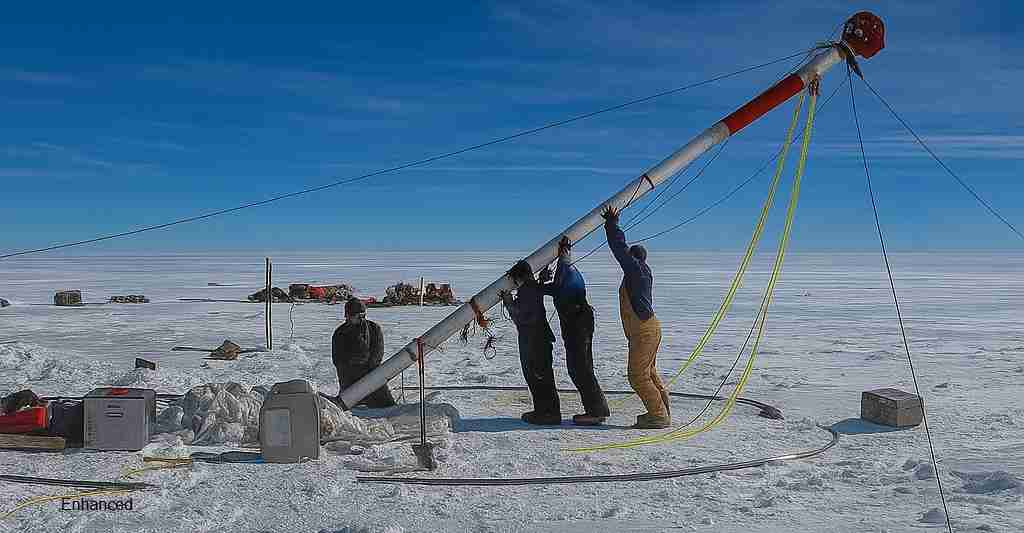
The COLDEX consortium recovered ice in the Allan Hills region of East Antarctica where topography and katabatic winds expose very old layers near the surface. This field recovery produced the oldest directly dated ice and ancient air sample ever retrieved, enabling new tests of how Earth’s climate system behaved during warmer intervals.
Age and dating: Researchers used argon isotope analysis of noble gases trapped in tiny air bubbles to directly date the samples, placing them at about 6 million years old. For background on the field release see the WHOI press release.
Isotopic results: Early oxygen‑isotope analysis of the ice indicates a long‑term polar cooling of roughly 12°C (22°F) over the last 6 million years, providing a direct estimate of long‑term Antarctic cooling during the transition from the Miocene/Pliocene to the present (University of Maine summary).
How the ice was found
Teams targeted Allan Hills, East Antarctica because local wind patterns and ice flow expose ancient layers near the surface, allowing access to far older ice than typical deep‑drilling sites. The recovery relied on careful field sampling to avoid contamination and on specialized techniques to extract the tiny, fragile air bubbles for laboratory analysis (WHOI press release).
“Katabatic winds and ice movement at Allan Hills create natural windows into very old ice — precise sampling and lab methods let us read the trapped atmosphere directly.”
Why direct dating matters
Most very old ice ages have relied on indirect correlations to distant markers. By directly measuring argon isotopes in noble gases trapped inside air bubbles, researchers placed these samples in time with much greater confidence. That direct dating extends the ice‑core record roughly sixfold beyond the prior ~800,000‑year limit, opening direct access to Miocene and Pliocene climates (WHOI press release).
Ancient air samples and what they tell us
The most valuable feature of the Allan Hills cores is the presence of ancient atmospheric bubbles. Those bubbles trap direct records of greenhouse gases (CO2, CH4) and other atmospheric properties from millions of years ago, enabling tests of ice‑sheet stability, long‑term carbon cycling, and ocean heat content during warmer intervals (WHOI press release; IFLScience coverage).
Snapshots, not continuous records: Researchers emphasize these cores offer discrete snapshots rather than an uninterrupted year‑by‑year chronology. Still, each snapshot provides crucial data points that extend knowledge into older eras and complement higher‑resolution younger cores (IFLScience).
What this means for climate science
Directly dated, 6‑million‑year‑old ice with trapped air gives scientists a new tool to test models of Earth system behavior under warmer climates. Data from the Miocene/Pliocene can constrain model responses of ice sheets and oceans to elevated greenhouse gases and help improve projections of long‑term sea level and climate sensitivity (PNAS paper; WHOI press release).
Who led the research
The work was led by the COLDEX (Center for Oldest Ice Exploration) project, a 15‑institution U.S. collaboration led by Oregon State University, with major contributions from the Woods Hole Oceanographic Institution and Princeton University. The findings are presented in a peer‑reviewed article in Proceedings of the National Academy of Sciences.
Next steps
Teams plan additional fieldwork in Allan Hills to search for even older ice and to expand the set of climate snapshots. COLDEX has plans and proposals extending through at least 2031 to improve temporal coverage and to reconstruct greenhouse‑gas histories from multiple samples (WHOI press release).
Implications for Sonoma, California
- Sea level and coastal risk: Past warm periods often corresponded with higher sea levels; improved constraints on ice‑sheet responses can inform Sonoma coastal planning and flood risk strategies (PNAS).
- Water and agriculture: Better paleoclimate data sharpen drought and water‑supply models used by regional managers, benefiting vineyards and farms through improved reservoir and groundwater planning (WHOI).
- Wildfire and heat risk: Paleoclimate constraints on system sensitivity feed regional projections for extreme heat and wildfire risk, supporting preparedness and public‑health planning.
- Local science & education: The discovery creates opportunities for Sonoma schools and universities to engage with cutting‑edge climate science through talks, curricula, and public forums.
- Policy & planning: For a moderate policy audience, the Allan Hills findings provide neutral, science‑based evidence to support practical adaptation investments in coastal zoning, water infrastructure, and wildfire mitigation.
Reporting notes and sources
This report draws on materials released by key partners and coverage pieces. Primary sources include the WHOI press release, a summary at the University of Maine Climate Change Institute, accessible coverage at IFLScience, and the peer‑reviewed article in PNAS.
Note: Researchers caution the Allan Hills samples are snapshots rather than continuous chronologies, and that building full greenhouse‑gas histories will require more sampling and time.