Chevron president warns California could face fuel shortages, says company may exit in 10 years amid strict energy rules
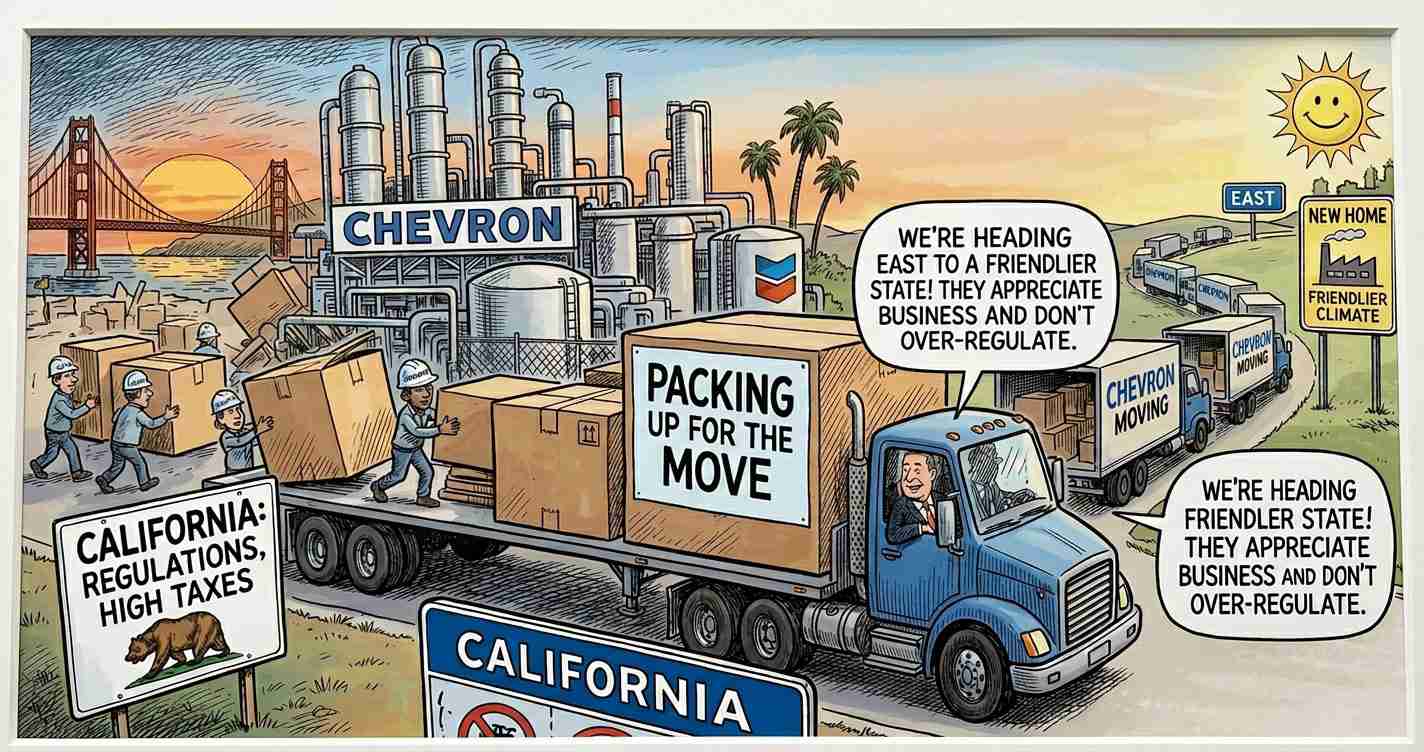
Chevron President Andy Walz warns California could face severe fuel shortages and higher prices as strict energy regulations and refinery taxes risk the company exiting within a decade, threatening jobs, refining capacity and regional energy security.
- Potential exit: Chevron says stricter rules and refinery taxes could force it to leave California within 10 years, risking large drops in refining capacity and higher gas prices (Fox Business, Insurance Journal).
- Cost impact: Proposed cap-and-invest changes and related rules could add roughly $500 million in costs over five years and raise pump prices by about $1 per gallon by 2030 (Fox Business, Insurance Journal).
- Supply vulnerability: California’s reliance on foreign crude and refined imports and limited pipeline connectivity makes it especially vulnerable to global supply disruptions tied to the Iran war and reduced Asian refining (Insurance Journal).
What Chevron is warning
Chevron’s California president, Andy Walz, wrote to Governor Gavin Newsom and state regulators calling current and proposed energy regulations “adversarial,” and warning they threaten Chevron’s ability to operate in the state. Walz warned,
“abandon the tax on refineries or they won’t have any refineries in 10 years. If it stays that way — Chevron will be gone in 10 years for sure. We won’t be able to make it.”
The letter and related comments were reported by the Insurance Journal.
Cap-and-invest changes and cost estimates
Walz highlighted proposed adjustments to California’s cap-and-invest program, including the removal of roughly 118.3 million carbon allowances from the market between 2027 and 2030 and a longer-term target of cutting carbon by 90% by 2045. Chevron estimates those changes could add about $500 million in compliance costs within five years and says the measures could “cripple the survivability of the state’s remaining refineries.” These impacts were detailed in coverage by Fox Business and Insurance Journal.
Supply shocks and global pressures
Industry officials point to the Iran war and disruptions in the Strait of Hormuz as increasing risks to oil flows from Asia and the Middle East. Because California imports a significant share of crude and refined products from overseas, reduced Asian refinery runs and geopolitical supply shocks could tighten local markets. The company has shifted shipments from the U.S. Gulf Coast to California via the Panama Canal to compensate — a more costly and complex route than traditional domestic flows — while U.S. diesel prices have risen amid tightening markets (Insurance Journal).
California’s infrastructure and capacity limits
California is often described as an “energy island.” The state lacks pipeline connections to major Gulf Coast refining hubs and therefore depends on in-state refining capacity and some imports. The California Energy Commission warns that the loss of large refineries would sharply reduce statewide capacity. Chevron operates two of the state’s largest refineries; regulators estimate Chevron’s exit could cut state refining capacity by about 34%, a reduction that could trigger regional gasoline and jet-fuel shortages (Insurance Journal).
Economic and community stakes
Chevron and industry allies warn a substantial cut in refining capacity could push pump prices higher and jeopardize jobs. The company projects proposed changes could raise prices by roughly $1 per gallon by 2030 and put as many as 536,770 industry-related jobs at risk, including refinery workers and supporting sectors. Chevron frames these outcomes as threats to both the economy and national security, noting that military installations in California depend on reliable fuel supplies (Fox Business).
State and regulator responses
The Newsom administration dismissed Chevron’s warnings as part of an industry effort to pressure state climate policy, accusing oil companies of “cashing in” on geopolitical events while opposing California’s energy rules. Meanwhile, the California Air Resources Board (CARB) intends to present proposed cap-and-invest amendments for public consideration at a hearing scheduled for late May 2026; CARB says the public process allows for input and changes before final rules are adopted, and supporters argue the state must continue aggressive action to meet long-term climate goals (Fox Business).
Verifying the claims
Walz and Chevron outline a worst-case scenario tied to policy shifts and global shocks. Independent verification of specific figures — such as the $500 million cost estimate and the 536,770 jobs-at-risk number — depends on assumptions about market responses, cost pass-through to consumers, and the speed of refinery scale-backs. Regulators, labor leaders and analysts are expected to assess these assumptions during the CARB public process and hearings (Fox Business, Insurance Journal).
Implications for Sonoma, California
Economic impact: Sonoma County residents could face higher gas prices and increased costs for farm diesel, freight and local logistics if refining capacity falls or companies pass compliance and shipping costs to consumers. Tourism and agriculture are particularly sensitive to fuel price volatility.
Jobs and employers: Although Sonoma is not a major refining center, many residents commute across the Bay Area. Higher fuel costs reduce disposable income, squeeze small businesses reliant on trucking and deliveries, and could ripple through seasonal employment.
Political and policy consequences: Chevron’s warnings may intensify local debate over the pace of California’s transition away from fossil fuels and the role of refinery taxes, while many residents continue to support climate action that reduces pollution and wildfire risk.
Social effects: Lower-income households would feel increased transportation costs more acutely; nonprofits and service agencies may face higher operating expenses for transportation and deliveries.
Cultural relevance: Sonoma’s wine and tourism industries depend on predictable travel costs and reliable logistics; fuel-price spikes could squeeze small vintners and hospitality operators already managing rising costs.
Practical steps for residents
- Local planning: Review emergency fuel supplies for critical services and coordinate with regional partners.
- Efficiency: Promote fuel-efficient transportation, carpooling, telework and public transit.
- Electrification: Accelerate local programs to expand electric-vehicle charging infrastructure.
- Household prep: Budget for price swings and explore alternative transport methods when possible.
Sources and further reading
- Fox Business: “Chevron warns Newsom’s ‘adversarial’ energy agenda could cripple California economy, send gas prices soaring”
- Insurance Journal: “Chevron Warns California Energy Rules, Taxes Could Force Exit, Cause Fuel Shortages”