Sea of Silent Cars: Volkswagen Dieselgate Mojave Desert Lot Near Victorville Became America’s Largest Car Storage Site
After Volkswagen’s 2015 Dieselgate revelations, tens of thousands of VW and Audi diesel cars were stored in Mojave Desert lots near Victorville, California, awaiting buybacks, repairs or disposal under massive court-ordered settlements and logistical operations.
- Massive buyback and storage: Tens of thousands of Volkswagen and Audi diesel vehicles were parked for years near Victorville as part of the U.S. response to the 2015 scandal — see Wikipedia — Volkswagen emissions scandal.
- Court-ordered remedies: The cars were part of a court-ordered buyback, lease-termination and repair program tied to U.S. settlements that cost Volkswagen billions — see U.S. Department of Justice — 2016 settlement.
- Preservation strategy: The desert’s dry climate reduced rust and preserved vehicles while crews maintained batteries and engines until fixes, resale or scrapping — context from Wikipedia — Volkswagen emissions scandal.
What the Victorville lots looked like — and why they existed
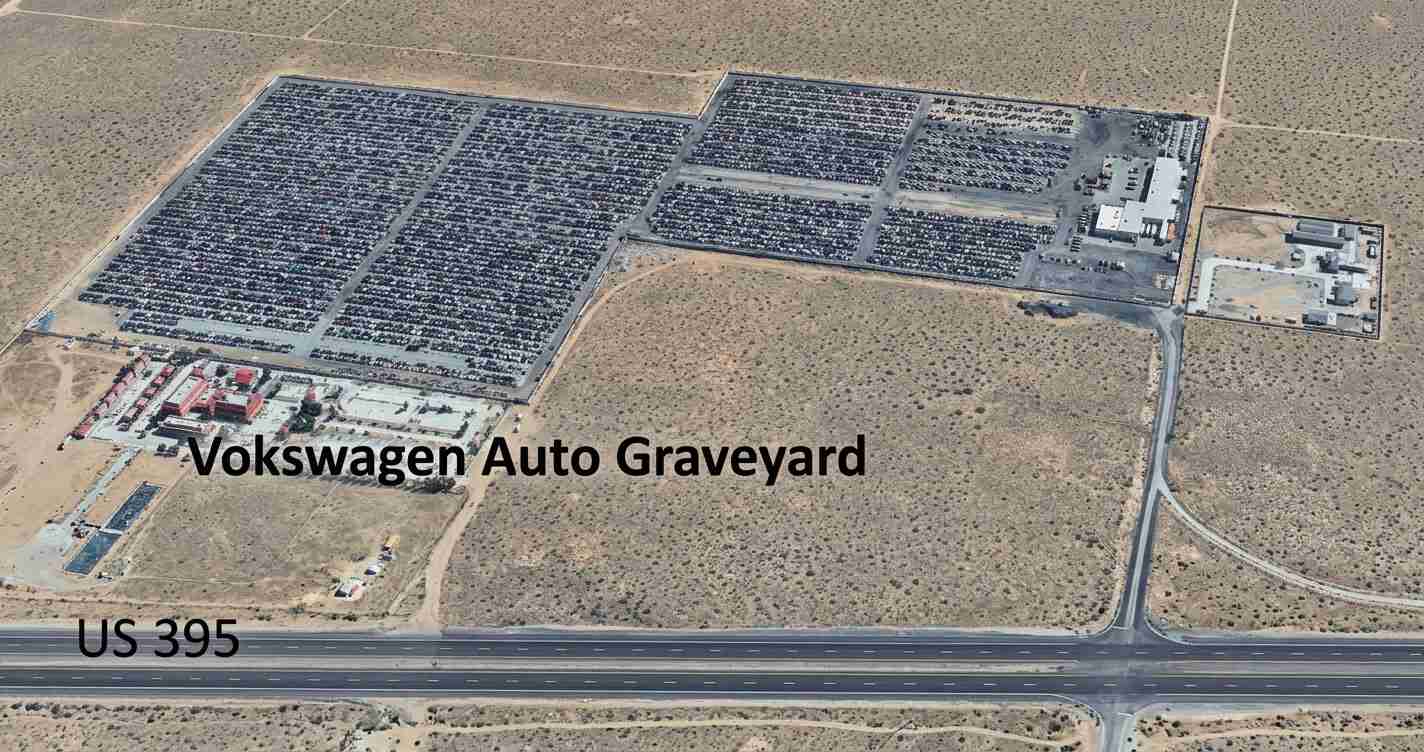
When aerial photos circulated, many called the site a car graveyard. Rows of Jettas, Passats, Golfs, Beetles and Audi A3s stretched to the horizon on sandy lots. Those images became a visual measure of the fallout from what regulators described as an unprecedented program of fraud.
The scandal and regulatory response
In September 2015 the U.S. Environmental Protection Agency said Volkswagen had installed “defeat devices” in many TDI diesel cars — software that detected test conditions and activated emissions controls only during laboratory testing. On-road emissions of nitrogen oxides (NOx) could exceed legal limits by as much as 35 to 40 times. Volkswagen admitted the deception in early September 2015 (see Wikipedia — Volkswagen emissions scandal and the DOJ — 2016 press release).
Why the Mojave Desert?
Desert land near Victorville offered cheap space and a dry climate that helps preserve metal. Volkswagen parked cars outdoors strategically: dry air limits corrosion while maintenance crews periodically started engines, moved cars and checked batteries so vehicles could be returned to roadworthy condition prior to repair, resale or disposal. The Victorville site was one of several storage locations, including an abandoned football stadium in Detroit and a former paper mill in Minnesota (see Wikipedia — Volkswagen emissions scandal).
Logistics and maintenance
Storing tens of thousands of cars required careful logistics. Mechanics rotated vehicles to prevent battery drain and tire damage, and each vehicle was tracked through repair, certification or disposal pipelines. The goal: preserve as much value as possible. Feasible cars were fixed, certified and returned to the used-car market; those impractical to repair were scrapped or recycled. The scale required large teams and robust tracking systems (sources: Wikipedia, DOJ).
Costs and legal fallout
The U.S. settlement and related costs were enormous. In 2016 Volkswagen agreed to spend up to $14.7 billion in the U.S. to resolve claims, buybacks and fixes. Globally, costs ran much higher, with estimates into the tens of billions by 2019. Volkswagen pleaded guilty in 2017 to U.S. criminal charges, acknowledging that managers had directed engineers to design defeat devices; the company also faced multi-jurisdictional civil litigation and fines (see the DOJ — 2016 press release and a financial analysis in the CPA Journal).
How the stored cars were handled over time
Not all cars remained in the desert. Over several years many vehicles received EPA- and CARB-approved software and hardware updates and were returned to the used-car market as certified vehicles. Others, too old or too damaged, were scrapped. Volkswagen also funded mitigation programs and an NOx trust as part of the settlement. By 2019 many logistical issues had been addressed, though litigation and regulatory follow-up persisted in some areas (sources: Wikipedia, DOJ).
Implications for Sonoma, California
Economic impact: The influx of certified used Volkswagen and Audi vehicles into California’s market likely increased supply and moderated prices for some models, potentially benefiting Sonoma buyers seeking affordable used cars. At the same time, consumer trust in diesel models was damaged, affecting local sales.
Regulatory trust and consumer protection: Dieselgate reinforced the role of regulators such as the U.S. EPA and California Air Resources Board in enforcing clean-air rules. Local advocates cite the case as evidence for stricter oversight and clearer disclosure requirements.
Environmental and health concerns: The core issue was excess NOx emissions, which contribute to smog and respiratory problems — a clear concern for Sonoma’s air-quality-focused communities.
Local businesses and workforce: The scandal created demand for technicians, inspectors and logistics workers nationwide. Local shops and dealerships had to manage recalls and advise customers, increasing the value of trustworthy local service.
Cultural and practical effects: Dieselgate shifted perceptions of “clean diesel.” In Sonoma, this may have nudged buyers toward gasoline, hybrid or electric vehicles and encouraged greater reliance on official recall records and emissions certifications.
Advice for Sonoma drivers: If you own or consider a Volkswagen/Audi diesel from model years 2009–2015, check official recall and buyback records. Certified vehicles that passed EPA and CARB approvals should meet emissions standards, but always request documentation and service history before purchase (see Wikipedia — Volkswagen emissions scandal and the DOJ — 2016 press release).
Reporting in context
The Victorville lots were not simply abandoned junk; they were part of an organized, costly effort to comply with U.S. court orders, preserve asset value, and restore, to some degree, consumer confidence after one of the largest corporate frauds in automotive history. The rows of parked cars remain an enduring image of scale and consequence (sources: Wikipedia, DOJ, CPA Journal).