Ivanpah’s Bright Promise, Dark Trade-Offs: Inside the Mojave Solar Plant Raising Questions About “Clean” Energy
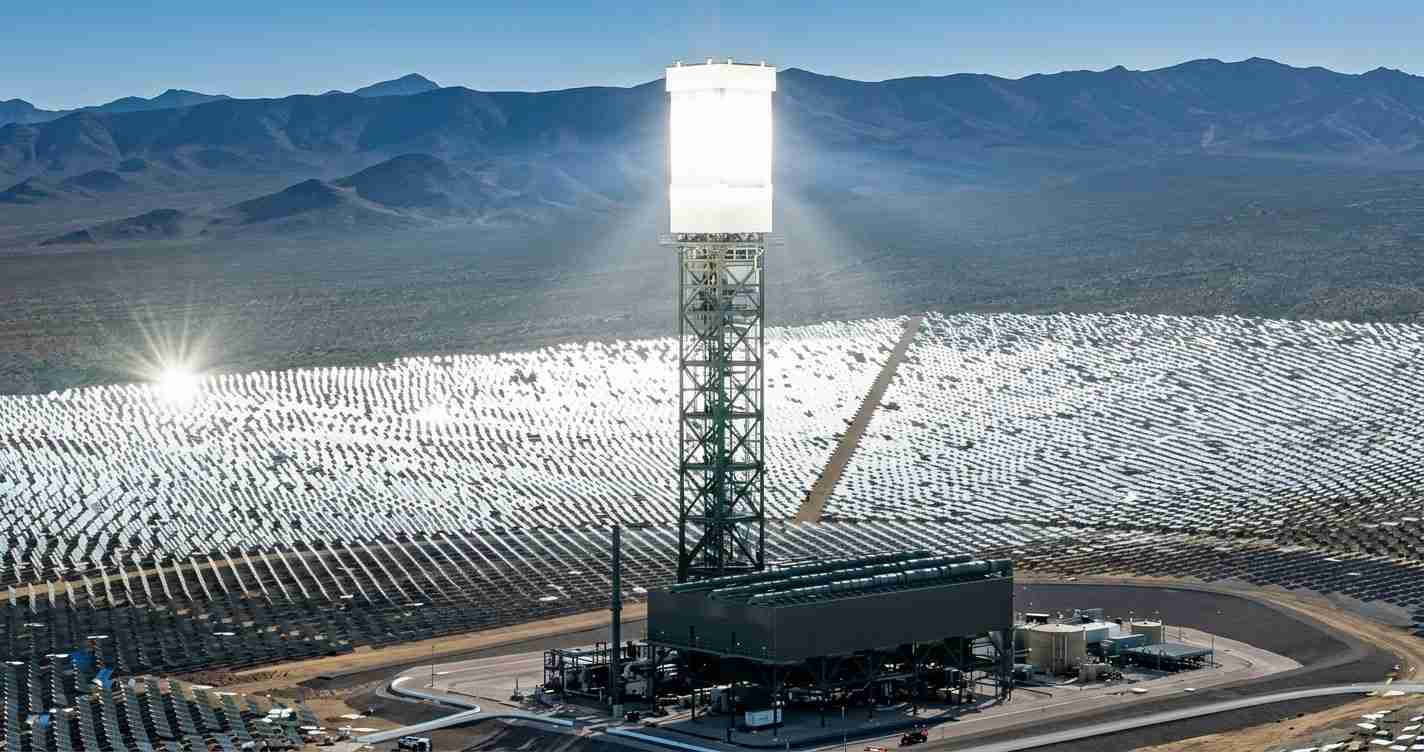
The Ivanpah Solar Electric Generating System in the Mojave Desert began operations in 2014, using 173,500 heliostats and three towers to produce 392 MW — but officials and environmentalists question its costs, wildlife impacts and true climate benefits.
- Scale and output: 173,500 heliostats, ~392 MW nameplate, designed for nearly 940,000 MWh/year.
- Costs and funding: Built with a $1.6 billion DOE loan guarantee and a $539 million Treasury grant.
- Environmental trade-offs: Documented bird deaths from solar flux and continued natural-gas use for startups producing substantial CO2.
Key information
Name: Ivanpah Solar Electric Generating System (ISEGS)
Location: Mojave Desert, near the California–Nevada border. See imagery from NASA/JPL.
Size: About 3,500–4,000 acres and roughly 173,500 heliostats (about 347,000 mirrors). References: Wikipedia; Bechtel.
Capacity: Gross capacity about 392 MW, designed to generate nearly 940,000 MWh/year but produced less in early years. See California Energy Commission and Wikipedia.
Funding: Built with a $1.6 billion DOE loan guarantee and a $539 million Treasury grant.
Environmental concerns: Documented bird deaths from concentrated sunlight (solar flux) and ongoing natural-gas use for daily startups, producing CO2. See monitoring and reporting compiled on Wikipedia and the California Energy Commission page.
Operational debate: High costs and performance shortfalls led to federal and state scrutiny, contract changes and talks of partial closure; see industry coverage at Environment & Energy Leader.
How Ivanpah works and what it was meant to do
Ivanpah is a concentrated solar thermal plant — a power tower — that uses hundreds of thousands of flat mirrors called heliostats to track sunlight and reflect it toward three central towers. Beams meet at receivers near the tower tops, heating a fluid to make steam; the steam drives turbines to produce electricity. The plant was intended to demonstrate that large-scale solar thermal could supply reliable, utility-scale power.
Developers and construction: Primary developers included BrightSource Energy, NRG and Google, with Bechtel as lead contractor.
Performance and technical reality
Ivanpah’s nameplate capacity is about 392 MW. Early projections promised close to 940,000 MWh a year, but production fell short in initial years. Operators later reported improved output from Units 1 and 3 while Unit 2 sometimes underperformed. The plant heats steam to high temperatures using BrightSource’s power tower technology but lacks large thermal storage, making it dependent on direct sunlight and backup systems.
Money, subsidies and the cost question
Ivanpah was expensive to build. Federal support included a $1.6 billion loan guarantee and a $539 million Treasury grant, covering roughly 30% of construction costs. Over time, photovoltaic panels and batteries dropped in price, making Ivanpah’s electricity comparatively expensive. Federal and state officials have weighed shutdowns; utilities and owners negotiated contract changes and buyouts. See industry coverage at Environment & Energy Leader.
Wildlife and the “solar flux” problem
A major environmental concern is harm to birds that fly into concentrated beams of sunlight — known as solar flux — and suffer injury or death. Towers attract insects, which draw insect-eating birds into dangerous zones of intense light and heat. Federal monitoring has recorded multiple incidents and ongoing mortality, prompting debate over how to weigh wildlife impacts against climate benefits. See reporting and monitoring compiled on Wikipedia and the California Energy Commission (CEC).
Natural gas use and emissions
Ivanpah relies on natural gas for daily startups and to sustain operations when sunlight is insufficient. That usage produces carbon dioxide; public estimates place annual CO2 from backup gas and startups in the tens of thousands of metric tons, comparable to emissions from thousands of homes. This complicates the facility’s “clean” label and has fueled criticism.
Regulatory and operational status
Since 2014, Ivanpah has faced contract renegotiations and regulatory scrutiny. Utilities, owners and state regulators have disputed the plant’s grid role and price. Plans to partially shut the plant — including termination of some contracts and buyout talks — surfaced in recent years. California regulators later decided the plant still provides grid support and paused full closures, while federal agencies at times backed closure proposals because of cost concerns. Sources: Wikipedia; Environment & Energy Leader; CEC.
Broader lessons about evaluating “green” projects
Ivanpah demonstrates that a project can be technically innovative yet costly and controversial. It doubled U.S. solar thermal capacity at opening and proved power-tower technology at scale, but rapid declines in photovoltaic and battery costs altered the economics of clean power. Environmental trade-offs — habitat loss, wildlife mortality, and fossil-fuel backup emissions — complicate narratives equating large renewables with unequivocal net environmental benefit.
“Projects labeled ‘green’ can still carry ecological costs and fiscal risks; oversight and comparative analysis remain essential.”
Reporting, monitoring and public records
Public materials include federal and state power-plant pages, project web pages and independent reporting. For background and technical details see: Wikipedia; the U.S. Department of Energy’s coverage of the plant opening at DOE; Bechtel project pages; California Energy Commission plant records at CEC; and imagery from NASA/JPL.
Implications for Sonoma, California
Economic impact: Higher-cost generation like Ivanpah can influence utility procurement and customer bills, affecting Sonoma residents and businesses.
Environmental and conservation concerns: Sonoma values open space and wildlife; Ivanpah highlights tensions when approving large projects in sensitive landscapes and may push local planners toward distributed solutions.
Grid reliability and policy: Ivanpah’s debates over reliability and cost show why Sonoma officials should stay engaged in state procurement and demand transparent comparisons of cost, emissions and ecological impact.
Political and public trust: Federal funding, taxpayer risk and environmental questions can spur demands for stronger oversight in politically engaged regions like Sonoma.
Practical effects on residents: Homeowners and businesses considering solar may find rooftop photovoltaic systems paired with batteries more attractive — lower footprint, lower bills, local siting.
Cultural relevance: Sonoma’s landscape, agriculture and tourism identity shape local views on distant projects that nonetheless reflect statewide choices about meeting climate goals.
Reporting sources and further reading
- Ivanpah Solar Power Facility — Wikipedia
- Bechtel — Ivanpah project page
- U.S. Department of Energy — plant opening and project support
- NASA/JPL image of Ivanpah
- California Energy Commission — Ivanpah plant records
- Environment & Energy Leader — coverage on shutdown and market shifts
Reporting note: This story relies on public project records, state filings and industry reporting to examine how a once-celebrated California solar thermal plant became a test case for weighing costs, wildlife impacts and the changing economics of clean energy.